Showing posts with label Jane Austen. Show all posts

Thursday, 10 September 2026

Northanger Dulwich


 A day after the visit to the Orange Theatre, we went to Dulwich Picture Gallery, to watch an evening performance in the grounds.

Northanger Abbey, or a version of it at least, was performed by the Moving Parts Theatre Company.  A small cast of seven, using a simple boxy but versatile stage setting, did brilliantly - they conveyed the story well, and were very funny.  

They also reached out, in the script, to other material - not just the gothic novels Austen was satirising and supporting, but also Regency guides to manners, and what was expected of young women.  

It worked well.  The cast also helped the audience to their seats, and ensured they were comfy - gave out the QR codes for the programme (!) and generally chatted.  Many of the actors also wrote or produced the piece - it is a small company.

Anyway, we enjoyed it very much indeed - and it was something of a relief after Black Comedy to have such a joyful experience.


Tuesday, 16 December 2025

Austen Day

 So, 250 years ago today, Jane Austen was born.

We remember reading Northanger Abbey for O Level. We spent more time in the exam writing about her than the other two writers combined (Shakespeare and Tennyson, since you ask).

For A level, Mansfield Park and Emma.

For our degree Everybloodything. And 'Regulated Hatred' and Locke, Barbara Hardy and Marilyn Butler.  And everything else relevant...

BBC Radio 4 was in full celebration mode today, from Woman's Hour to Front Row and all points in between. Radio 4 presenters in crinolines and strange voices.  Versions of the books, and some brilliant discussions.

I think this was my favourite.


Sunday, 14 December 2025

Lizzie, Again

Quite a good BBC Radio 4 version of Pride and Prejudice is on at the present.
Severely edited, but still fun.

Tamsin Greig as Jane Austen.

Wednesday, 26 February 2025

Some Anniversaries in 2025

 There are doubtless many more occasions to celebrate, but these caught the eye of the Trees...

350 years   Royal Observatory Founded (and Flamsteed as first Astronomer Royal)
            Cassini division discovered (by Cassini), in Saturn's rings.

250 years   Jane Austen's Birth
            JMW Turner's Birth
                     
200 years   Royal Institution Christmas Lectures Began
            First Passenger Train Ran

100 years   First TV transmission


Monday, 16 March 2020

School


William Forster Memories

I was at William Forster School in Tottenham from 1969 (when it was, I suspect, technically still Downhills School; I was taught in the building by Tottenham Green).  I left in 1976 after sixth form, to go to University. 

For the second and third school years most of my year’s time was spent at the lower school site on Downhills Rd, closer to Turnpike Lane, and across Belmont Rd.  From the fourth year onwards, I was in the modernist brand-new building on Langham Rd.

The new school was built on the site of the old Palace Gates railway where it crossed under West Green Rd.  There is a lot to be written about the railway, and the echoes of it in my life, but that is elsewhere.  

I remember that new school building was meant to be a showcase, with a swimming pool, for example, to be built as part of phase two.  But the arrival of Margaret Thatcher, as the new Education Secretary, resulted in the cancellation of all the subsequent phases.

My mother never forgave her for cancelling the second phase of the building.

The general cry at the time was ‘Thatcher, Thatcher, milk snatcher’ because she stopped the supply of school milk, that tried to ensure underprivileged children had sufficient calcium and vitamins.  It was, I think, a hangover from wartime.  I never did like school milk, but even at a relatively young age I could see it was wrong to stop it wholesale.  

My first form teacher was Mr Kekwick (we were form ‘1KK’).  He was a cigarette-smoking French teacher, and taught well.   He was also the first and only person ever to give me the cane.  I can still recall part of the morning register he would call for the class:

‘Barrowclough, Baxter, Beckenham, Burke, Davidson, Driver, Head,…’

In that first year, I can remember the school drama society, where Tony Garwood was the star – playing Scrooge in ‘A Christmas Carol’.   I played Ignorance or Want, revealed from beneath the cloak of the Ghost of Christmas Present.

I tried to learn trumpet, too, in the first year, but struggled.  I couldn’t really practice it at home in our council flat.  

Other teachers I remember were Miss Hull, Mr Fisher (the Head, who seemed never to be around), Mr Francis (the Deputy Head who seemed to actually to run the school), Ms Frances, Miss Flowers (Music), Mr Titchmarsh (who made me re-do my UCAS form to make sure I put Durham second after Cambridge – rather than put Durham last and UEA second, which is what I’d done initially!), Miss Cherry, Mr Crispin & Mr Oakley (PE), Mr Ayres (History – and an enthusiast for local history), Mr Timpson (?), Miss Reeves (who taught me for O Level English Literature – and I really wanted to do it at A level but the school didn’t offer it), and:-

For Chemistry: Mr Jordan and Mr Messi.

For Physics: Mr Gray and Mr May.

For Maths: Mr Hill, Mr O’Driscoll, Mr Taylor and Mr Joshi.

Others have reminded me online about Mr Learner (Woodwork), Miss Sharrow (RE) and others.

I remember Richard Stevens – my best friend in the earlier years, David Kemal, Pauls Davidson, Langridge and Morris, (and others from the Morris clan, such as Pauline and Maxine), Peter Large, Omar Sattaur, Erdjan, Ian Morley, Hilary White, Tracy/Terry Rogers, Linda Brownjohn, Jacqui Thompson, Jackie Clarke, Fred Baxter, Kim Greenham, Robin Barrowclough, Sylvester McKay, Everton Herbert, Winston Silcott, Jill Stubbs, Gillian Stone,  Susan Brown, Nadira Ali, Tony Garwood, Henrik Castello, Paul Somerville, Violet Rustean, Kenny Poulton, Steve Harold, Anna Diaz, Jean Zukabitz, Ralston Maas, Andrew Kyriacou, Faizal Hussain, Konje Hussan, Aldo Oppertelli, Steven Beckenham, Danny Burke, Stephen Driver, June Anthony, Thelma ?, Steve Whitby, Stephen Young, Gary Avis, Val Walker (Locker), Stelios Charalambides.  And many others I’ve failed to mention.

While at the school I was bullied – probably from the 2nd (or maybe the start of the 3rd) year to the 5th year.  This was in the form of teasing, taunts and occasional punches from boys in my class.  Andrew Kyriacou was the worst offender, by far, while others, such as the Pauls, Richard and Ian took no part.  This ended when a teacher finally intervened.  The bullying hurt a lot emotionally; and I suspect in some ways I have never quite got over it.  But, by the end of 5th year and into 6th form, it was far better, and we all explored local pubs and clubs (I fear I still owe Mr O’Driscoll a pint).

(As an aside, in new money, year 3 was current year 9).

I really enjoyed classes.  Maths was always fun, and I particularly loved geometry, calculus (thanks to Mr Taylor), and the complex plane.  Euler’s formula! 

Physics and chemistry of course.  I can still remember the struggle to understand the internal resistance of a cell, but always loved Galileo’s equations of motion – what my two sons now call SUVAT.  And enthalpies of reaction, electron orbitals, all that carbon chemistry.  But not just STEM subjects. Also English and English lit in particular.  Austen and Tennyson for ‘O’ Level, I recall.  

I remember playing football on Belmont recreation ground in the mud and rain, the school production of Joseph and the Technicolour Dreamcoat (Richard Stevens as Joseph), and the annual violence of the pupils versus teachers hockey match in Downhills Park (with Mr Hill, suitably armoured-up, in goal).

Overall, I’m surely grateful to WF, and the teachers, and the friends I made there.  I certainly had a different upbringing to many I met at University in the mid-70s.  Many of whom had had a very privileged background by comparison.   In some ways, as a result, I suspect I ended up with a more realistic, or at least a richer, perspective on life.


Finally, a random few pictures gleaned from the InterWeb:

David Hill

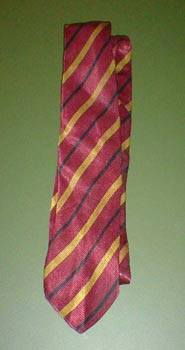
School Tie


Blazer badge

And an explanation


Friday, 21 February 2020

Emma in Greenwich

So, last night we went to see Emma at Greenwich PictureHouse. 

The film was a light piece of froth - tonally, I thought very different from the book.  My test scenes are those when Isabella and Mr John Knightly visit Mr Woodhouse and Emma.  These correspond to the astonishing and groundbreaking chapters 11 and 12 of Emma. 

The detailed subtlety and behaviours described by Austen were replaced by broad activities, and much of the nuance was - quite often - lost.  This was particularly true in the case of the character of Isabella, which was clumsily depicted, I thought.

That being said, Emma, Harriet and Knightly, and Mrs Elton, were pretty good.  But the character most like the novel Was Mr Weston (LeStrange from Sherlock!).  And that being said, the scenes on Box Hill were excruciatingly well done, I thought.

We may have had a rather odd viewing, however.  As there were problems with the air conditioning in screen 5, and it was freezing!  As cold - if not more so - as the wintry weather outside.  They provided some (thin) blankets and pillows, and we kept our coats on.  But, every so often a blanket would slip down and I would feel chilly.

So when Bill Nighy as Mr Woodhouse asked if anyone else could feel a chill draught, someone in the audience said 'I can!' - and there was a sympathetic laugh from all around them.

Odd that the character we most sympathised with was the valetudinarian Mr W.

Sunday, 13 November 2011

Open Chaucer

Wow.
I've just been listening to BBC R4 "Open Book" - which is having a comic writing series.  They began this week with John Mullan and Terry Jones discussing Chaucer, with Mariella Frostrup.

TJ described Chaucer's humour as 'like Jane Austen's' - it is often about the stuff he doesn't tell you.  So you need context and you have to work it out.  That feels about right, at least where the General Prologue is concerned.

And then they discussed the bawdier humour, including the Miller's and Reeve's Tales (briefly), before a reading from the Merchant's Tale (the bit where May defends herself for 'struggling with a man up in a tree').  Mostly, they read the middle english version, so far as I could recall.  Brilliant, and funny.

TJ denied any Chaucerian influences on Monty Python (although I think he admitted to some parallels by implication), and I enjoyed it all immensely. 

Hear it on the i-Player before the BBC hides it...

Monday, 31 May 2010

Box Hill

So on Sunday, the only reasonably bright day of the late May bank holiday, we went to Box Hill.  We had been thinking of it anyway, and then it was mentioned in Outnumbered - synchronicity, we had to go. 

As people have been discovering for centuries, there were marvellous views from the top - admittedly overlooking Dorking...

I tried to construct a panorama with some freebie software - it didn't come out too badly, although it is hard to see from this image...
Box Hill is named after the Box trees that grow on it, altough I have to admit we didn't knowingly spot any.  The Hill is part of the North Downs, cut away on the South side by the river Mole - the steep fall makes the views so good.

The wood on the top of the Hill does contain many different trees.  We saw oak, beeches, silver birches, and many others...
  
We also saw many of the well-known sites.  This is the grave of Major Peter Labellière.  Wikipedia says: He was buried (on July 11, 1800) head downwards, and according to some sources he reasoned for this by saying "the world is topsy turvy, and I'll be the right way in the end"; other sources indicate that he merely wished to emulate the example of St. Peter, who was apocryphally (in the Acts of Peter) crucified upside-down.


This is the old fort, again according to Wikipedia: This was built in the late 1890s as one of a number of forts (known as the London Defence Positions) built to protect London from invasion from continental Europe.  Also, according to the same article, bats nest there.
After the fort we stopped briefly at the new visitor centre to eat our sandwiches.  Very nice, typical NT establishment. 

The family grew slightly irritated when I insisted on reading chapter 43 of Emma - for the obvious reasons - but honestly, only a very little of it out loud.  So some of us juggled instead.

The roads were full of cyclists - I guess the Hill is an interesting sort of challenge, and not too car-bound. 

Every so often we would turn a corner and be surprised once again by the view...
The woods were darker and cooler - and fullof birdsong.  Here is one of the perpetrators...

We cam across this fantastic old Yew tree (one of many).
I like the skinny tallness of this tree, with so few branches at such dizzying heights...
And this one for its drama...
The trees were also aswarm with these caterpillars, hanging from silk and landing in hair, clothes, etc.

Sunday, 1 November 2009

Why the green fuse?

I pushed the Dylan Thomas (see last post) at the blog a week ago - but to be published later (days after I'd chosen it)

And well before I'd properly thought about Emma.

I assumed since it was just a novel, I'd read it quite speedily. But no, I could not skim it. In fact, I could not keep up with the series on the Beeb.

Both the Thomas poem and the novel are challenging, and return slow reading, but they are truly not the same. The poem inverts sentences, uses elliptical constructions, the poet challenges the reader to work out what he means. Austen by comparison says what she means, but knows you are not likely to read it.

We all know that complex poems require slow careful readings, which we give them, and try to weigh the words and tease the sense out from them.

At the same time we race through novels, skimming the sense; we organise our understanding of them through plot and character.

Emma is decidedly not a poem; it is a true - and in a somewhat secondary and trivial way avant-guarde - novel. But it argues that the same reading habits that are appropriate for a dense poem are required here, in this prose.

Or demanded, for a true reading.

So, spending 20 minutes working out exactly what the start of Thomas's poem means is a mere fraction of what Austen demands in Emma.

Most readers don't notice, or give up, and fall back on the more comforting stories: Pride and...,, Sense and....

Truthfully; if you don't get Emma, you are reading too quickly.

Thursday, 15 October 2009

Chapter 11

So taking my cue from D.W. Harding I read the next chapter of Emma - chapter 11 - quite carefully.

In the Penguin edition it is 5 & 1/2 pages long.

It took me three hours.

And I'm going to have to go back and look at it again. This stuff is really complicated.

Monday, 12 October 2009

Emma

This post clearly has to be about Jane Austen, as the last one suggested. (Regulated Hatred, the title of the last post, is an essay by D.W. Harding, in part about misreadings of Austen).

The new BBC Emma. Hmmm. I'm not sure.

I hated the beginning of the first episode (Jane, Emma and Frank as toddlers, all losing mothers. Jane and Frank sent away, etc. Moralising, unecessary and annoying. But maybe that's just me). And I don't understand why the narrating voiceover is by a bloke who seems to think he's telling us a fairy tale. And Mr Knightley is too young (and not grumpy enough). And the village scenes are far too cosy and costume drama-ish (if you see what I mean). I could go on.

And yet I have to admit it is growing on me. Tamsin Greig makes a fine Miss Bates, and the scene where she tells of Mr Elton's engagement - blurting it out in front of a distraught Harriet - was well done. And the script does point up - and sometimes dramatises - snatches from the book that I had missed or forgotten (eg Jane making lists of books she means to read but doesn't read them).

All in all, however (and this takes me back to the beginning of the post) it just doesn't feel nasty enough. Austen, as Harding spotted, writes beautiful, balanced sentences showing just how stupid people are. Not always very nice at all. The adaptation just feels too, well, happy. Still perhaps it will get better...

Wednesday, 26 August 2009

I remember Ad-- Woosh!!

Earlier today the route of a new high-speed railway line was announced by Network Rail. The journey time from London to Scotland would be brought down to 2 hrs 16 mins.
Now at first sight this is a fantastic idea. We have good friends in Edinburgh, Manchester and Liverpool, so this would make them feel that little bit closer. I hate flying anyway, but we would also be less likely to drive. We'd let the train take the strain.

But then I had a little think. We keep focusing on high-speed links, don't we?
Beeching did the same, concentrated on the profitable main lines and cut the branch lines that fed them (I have no idea if this is true, it's just what I was always taught).
When are we going to see the next new meandering country branch line open?

Adlestrop
Yes. I remember Adlestrop—
The name, because one afternoon
Of heat the express-train drew up there
Unwontedly. It was late June.

The steam hissed. Someone cleared his throat.
No one left and no one came
On the bare platform. What I saw
Was Adlestrop—only the name

And willows, willow-herb, and grass,
And meadowsweet, and haycocks dry,
No whit less still and lonely fair
Than the high cloudlets in the sky.

And for that minute a blackbird sang
Close by, and round him, mistier,
Farther and farther, all the birds
Of Oxfordshire and Gloucestershire.


Edward Thomas

According to Wikipedia (currently):
"The railway station closed in 1966, however the local bus shelter contains a bench which was originally on the platform. A plaque on the bench quotes Thomas’s original poem which describes an uneventful journey Thomas took on June 23 1914 on an Oxford to Worcester express. He did not alight from the train but his poem has immortalised the village throughout the English-speaking world ever since."

I know that from one point of view this is a pseudo-romantic evocation of a fantasy world that never existed. But it does also serve to remind us how much we have thrown away. As does The New Adlestrop - a smashing map.
And of course there is:


All of which is just meant to be a reminder that speed isn't everything, and sometimes other aspects of the way we travel may be more important than the fact that we arrive quickly.

So, let's start the campaign to rebuild and re-open Adlestrop station and all of those other places... Then you can have your high-speed line...

End of very mild rant.

In any case, they probably won't build it. 2020 as the best estimate for the first bit? A Government review also in hand? Helpful to the environment? Huge capital sums required? I don't think so.

Oh well, I was getting quite used to the idea.

(While looking things up for this blog, I encountered / remembered the fact that Jane Austen is also linked to Adlestrop. She seemingly made several visits there to stay with her uncle who was the Church rector and there is a rumour that the house and grounds of Adlestrop Park were used for the setting of Mansfield Park. Amazing).