A few months ago, the regular email I get from New Scientist
magazine mentioned the then-upcoming launch of the Lucy space probe. This mission is designed to explore the Trojan
asteroids in the orbit of Jupiter.
I thought this interesting, and watched the launch online in
October, on NASA TV, which itself a very
strange channel: there’s a sense that people who just want to geek out about
space and engineering are perpetually holding themselves back, probably to stick
to the corporate messages.
The Lucy mission has a complex trajectory – this is what the
NASA site said in late November:
The spacecraft is traveling at roughly 67,000 mph (108,000
kph) on a trajectory that will orbit the Sun and bring it back toward Earth in
October 2022 for the spacecraft’s first gravity assist. That manoeuvre will
accelerate and direct Lucy’s trajectory beyond the orbit of Mars. The
spacecraft will then swing back toward Earth for another gravity assist in
2024, which will propel Lucy toward the Donaldjohanson asteroid – located
within the solar system’s main asteroid belt – in 2025.
Lucy will then journey toward its first Trojan asteroid
encounter in the swarm ahead of Jupiter for a 2027 arrival. After completing
its first four targeted flybys, the spacecraft will travel back to Earth for a
third gravity boost in 2031, which will catapult it to the trailing swarm of
Trojans for a 2033 encounter.
It’s a complicated series of manoeuvres, and I suspect the
looping curves shown on the site don’t really do it justice. Lucy will carry a number of instruments,
including an infrared imaging spectrometer, a thermal emission spectrometer and
a range of cameras.
This mission captured my imagination, in part because of the
number of science fiction stories I’ve read set on the asteroids. Admittedly, these were more often about
mining the asteroid belt between Mars and Jupiter, but still there were stories
set among the Trojans.
Later, there was if anything a more SFNal mission launch: Dart,
which will attempt to nudge a large space rock, as part of experiments of
planetary defence systems. The ‘Double
Asteroid Redirection Test’:
is a planetary defence-driven test of technologies for preventing an impact
of Earth by a hazardous asteroid. DART will be the first demonstration of the
kinetic impactor technique to change the motion of an asteroid in space.
This is more than a little worrying, given the number of
stories there are out there, where such a mission goes wrong and wreaks
catastrophe on the Earth. Still, I’m
sure they’ve though of all that?
Following the launch of Dart, on Christmas Eve, came the
much-delayed launch of the James Webb Telescope is due. Webb, once deployed, will primarily look in
the infrared spectrum, and if successful will tell us a lot more about the
earliest era of the Universe.
Which got me thinking: given this triumvirate of interesting
launches in the last three months of 2021, what is already up there, and still
working?
Staying in the same vein as the James Webb launch, there’s
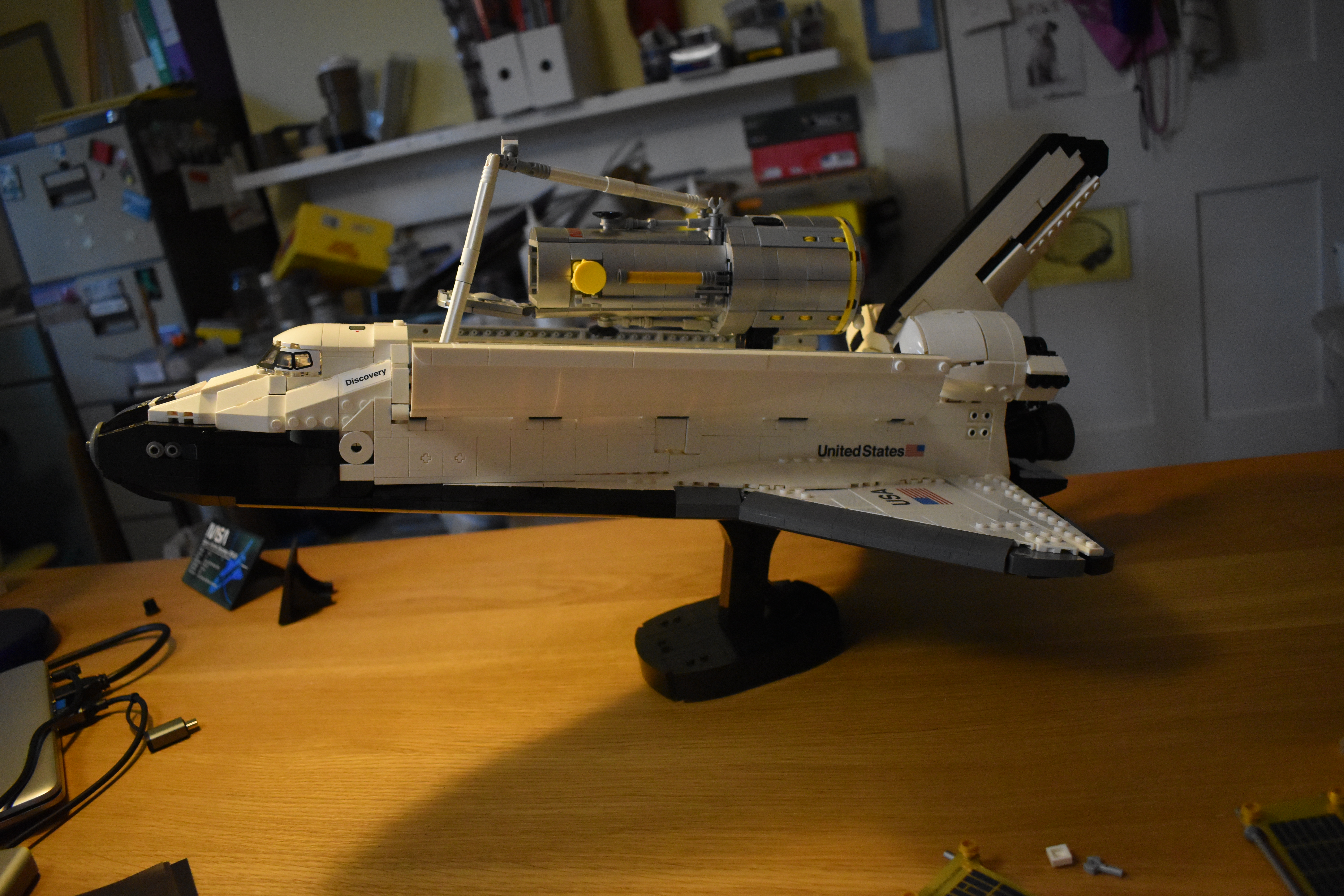
the Hubble Telescope, of course, which is still in operation, capturing
ravishing images, in the visible and ultraviolet wavelengths.
There are many other space-borne telescopes, such as the Chandra
X-Ray Observatory, launched in 1999 and still contributing to research on
black holes, dark matter and dark energy. Chandra has four mirrors focusing
X-rays. Images and spectra can be
captured.
Operating well beyond its expected lifetime, NASA's Advanced
Composition Explorer (ACE), launched in 1997, still sits at the Earth-Sun
L1 point to collect and analyse particles of solar, interplanetary,
interstellar and galactic origins. ACE
continues to provide space weather reports and warnings of geomagnetic storms
that can disrupt communications on Earth and harm astronauts in space.
More recently, again
just last December, a SpaceX Falcon 9 rocket launched NASA’s Imaging X-ray
Polarimetry Explorer (IXPE) satellite. The IXPE is the first satellite
capable of measuring the polarization of X-rays that come from cosmic sources,
such as black holes and neutron stars.
The satellite has three telescopes that can track and measure the
direction, arrival time, energy, and polarization of light.
There’s also the Parker Solar Probe, which in
November completed its 10th close approach to the Sun, coming within 5.3
million miles of the solar surface.
It isn’t all about NASA.
BepiColombo is Europe's first mission to Mercury. Launched on 20
October 2018, it is on a seven-year journey and should arrive at Mercury in
late 2025. It has already had a close
flyby of the planet, at 199 km in early October 2021, when it began sampling
the magnetic and particle environment around the planet. The mission comprises two spacecraft: the
Mercury Planetary Orbiter (MPO) and the Mercury Magnetospheric Orbiter (Mio).
BepiColombo is a joint mission between ESA and the Japan Aerospace Exploration
Agency (JAXA).
More to follow