Showing posts with label tennyson. Show all posts

Monday, 16 March 2020

School


William Forster Memories

I was at William Forster School in Tottenham from 1969 (when it was, I suspect, technically still Downhills School; I was taught in the building by Tottenham Green).  I left in 1976 after sixth form, to go to University. 

For the second and third school years most of my year’s time was spent at the lower school site on Downhills Rd, closer to Turnpike Lane, and across Belmont Rd.  From the fourth year onwards, I was in the modernist brand-new building on Langham Rd.

The new school was built on the site of the old Palace Gates railway where it crossed under West Green Rd.  There is a lot to be written about the railway, and the echoes of it in my life, but that is elsewhere.  

I remember that new school building was meant to be a showcase, with a swimming pool, for example, to be built as part of phase two.  But the arrival of Margaret Thatcher, as the new Education Secretary, resulted in the cancellation of all the subsequent phases.

My mother never forgave her for cancelling the second phase of the building.

The general cry at the time was ‘Thatcher, Thatcher, milk snatcher’ because she stopped the supply of school milk, that tried to ensure underprivileged children had sufficient calcium and vitamins.  It was, I think, a hangover from wartime.  I never did like school milk, but even at a relatively young age I could see it was wrong to stop it wholesale.  

My first form teacher was Mr Kekwick (we were form ‘1KK’).  He was a cigarette-smoking French teacher, and taught well.   He was also the first and only person ever to give me the cane.  I can still recall part of the morning register he would call for the class:

‘Barrowclough, Baxter, Beckenham, Burke, Davidson, Driver, Head,…’

In that first year, I can remember the school drama society, where Tony Garwood was the star – playing Scrooge in ‘A Christmas Carol’.   I played Ignorance or Want, revealed from beneath the cloak of the Ghost of Christmas Present.

I tried to learn trumpet, too, in the first year, but struggled.  I couldn’t really practice it at home in our council flat.  

Other teachers I remember were Miss Hull, Mr Fisher (the Head, who seemed never to be around), Mr Francis (the Deputy Head who seemed to actually to run the school), Ms Frances, Miss Flowers (Music), Mr Titchmarsh (who made me re-do my UCAS form to make sure I put Durham second after Cambridge – rather than put Durham last and UEA second, which is what I’d done initially!), Miss Cherry, Mr Crispin & Mr Oakley (PE), Mr Ayres (History – and an enthusiast for local history), Mr Timpson (?), Miss Reeves (who taught me for O Level English Literature – and I really wanted to do it at A level but the school didn’t offer it), and:-

For Chemistry: Mr Jordan and Mr Messi.

For Physics: Mr Gray and Mr May.

For Maths: Mr Hill, Mr O’Driscoll, Mr Taylor and Mr Joshi.

Others have reminded me online about Mr Learner (Woodwork), Miss Sharrow (RE) and others.

I remember Richard Stevens – my best friend in the earlier years, David Kemal, Pauls Davidson, Langridge and Morris, (and others from the Morris clan, such as Pauline and Maxine), Peter Large, Omar Sattaur, Erdjan, Ian Morley, Hilary White, Tracy/Terry Rogers, Linda Brownjohn, Jacqui Thompson, Jackie Clarke, Fred Baxter, Kim Greenham, Robin Barrowclough, Sylvester McKay, Everton Herbert, Winston Silcott, Jill Stubbs, Gillian Stone,  Susan Brown, Nadira Ali, Tony Garwood, Henrik Castello, Paul Somerville, Violet Rustean, Kenny Poulton, Steve Harold, Anna Diaz, Jean Zukabitz, Ralston Maas, Andrew Kyriacou, Faizal Hussain, Konje Hussan, Aldo Oppertelli, Steven Beckenham, Danny Burke, Stephen Driver, June Anthony, Thelma ?, Steve Whitby, Stephen Young, Gary Avis, Val Walker (Locker), Stelios Charalambides.  And many others I’ve failed to mention.

While at the school I was bullied – probably from the 2nd (or maybe the start of the 3rd) year to the 5th year.  This was in the form of teasing, taunts and occasional punches from boys in my class.  Andrew Kyriacou was the worst offender, by far, while others, such as the Pauls, Richard and Ian took no part.  This ended when a teacher finally intervened.  The bullying hurt a lot emotionally; and I suspect in some ways I have never quite got over it.  But, by the end of 5th year and into 6th form, it was far better, and we all explored local pubs and clubs (I fear I still owe Mr O’Driscoll a pint).

(As an aside, in new money, year 3 was current year 9).

I really enjoyed classes.  Maths was always fun, and I particularly loved geometry, calculus (thanks to Mr Taylor), and the complex plane.  Euler’s formula

Physics and chemistry of course.  I can still remember the struggle to understand the internal resistance of a cell, but always loved Galileo’s equations of motion – what my two sons now call SUVAT.  And enthalpies of reaction, electron orbitals, all that carbon chemistry.  But not just STEM subjects. Also English and English lit in particular.  Austen and Tennyson for ‘O’ Level, I recall.  

I remember playing football on Belmont recreation ground in the mud and rain, the school production of Joseph and the Technicolour Dreamcoat (Richard Stevens as Joseph), and the annual violence of the pupils versus teachers hockey match in Downhills Park (with Mr Hill, suitably armoured-up, in goal).

Overall, I’m surely grateful to WF, and the teachers, and the friends I made there.  I certainly had a different upbringing to many I met at University in the mid-70s.  Many of whom had had a very privileged background by comparison.   In some ways, as a result, I suspect I ended up with a more realistic, or at least a richer, perspective on life.


Finally, a random few pictures gleaned from the InterWeb:

David Hill
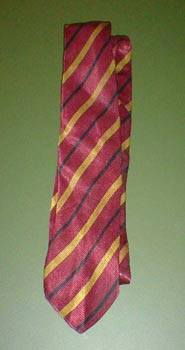
School Tie


Blazer badge

And an explanation


Monday, 14 May 2012

All about Browning

In recognition of Browning’s recent Bicentenary, as keen observers of TANH will have spotted, I posted a few of his poems. And I’m a bit of a Browning fan, so I wanted to show him off a little, to choose poems that would explain my enthusiasm.

This was really quite hard. Rather, I guess, like choosing the tracks to be your Desert Island Discs. What to include, and what to leave out, and why?

First off, I’d already plastered a few Browning’s over TANH as part of the Poem of the Week strand. In particular:-
And I also mentioned him in passing, in an essay on Tennyson, in 2009 and also discussed a radio programme about My Last Duchess.

So what to choose for the centenary?  Well, one of the great pleasures of Browning is his range, and the first thing I noticed was that I hadn't posted any of the love lyrics or shorter poems previously.  So I began with one of my favourite lyrics, Love Among the Ruins, with its unusual patterning of rhythm.
 
And by far the most famous of theshort poems is Home Thoughts from Abroad of course, with it's opening of "Oh, to be in England/Now that April's there" - so that seemed to be a cert.
 
Then, given that I was thinking about his most famous poetry, "The Pied Piper of Hamelin" had to be there with its wonderful:
Rats!

They fought the dogs and killed the cats,
And bit the babies in the cradles,
And ate the cheeses out of the vats,
And licked the soup from the cook’s own ladles,
Split open the kegs of salted sprats,
Made nests inside men’s Sunday hats,
And even spoiled the women’s chats
By drowning their speaking
With shrieking and squeaking
In fifty different sharps and flats.
After which why Garden Fancies II: Sindandus Schafnaburgensis? Partly, I will admit, a desire for some suitably 'crabbed' Browning but also because I love:
How did he like it when the live creatures
Tickled and toused and browsed him all over,
And worm, slug, eft, with serious features,
Came in, each one, for his right of trover?
---When the water-beetle with great blind deaf face
Made of her eggs the stately deposit,
And the newt borrowed just so much of the preface
As tiled in the top of his black wife's closet?
After which a more direct short poem again seemed in order - so I chose the "the quick sharp scratch/And blue spurt of a lighted match from "Meeting at Night"

By now I'd covered a lot of ground, but still hadn't touched upon one of Browning's great topics, the great painter and scupltors of renaissance Italy.  Hence Andrea del Sarto - called by some "the faultless painter" - which many critics have thought Browning's greatest poem.  I can see it is great, but to be honest it isn't even my favourite Browning poem about renaissance Italian painters! (*)

So in keeping with the plan of keeping things diverse, it was back to the short love lyric and Summum Bonum

Perhaps the most anthologised of Browning's poems (after the Pied Piper, of course) is My Last Duchess - and one of my great pleasures.  So I couldn't leave that out.

(")  And I had to have my favourite poem about a renaissance Italian painter, Fra Lippo Lippi.  Browning keeps close to Vasari.  The latter tells us 
Cosimo therefore, when he was working for him in his house, caused him to be shut in, so that he could not go out and waste his time; but he, cutting up the sheets of the bed with a pair of scissors, made a rope and let himself down by the window...
Which in Browning's poem becomes:
— three slim shapes,

And a face that looked up . . . zooks, sir, flesh and blood,
That's all I'm made of! Into shreds it went,
Curtain and counterpane and coverlet,
All the bed-furniture — a dozen knots,
There was a ladder! Down I let myself,
Hands and feet, scrambling somehow, and so dropped,
And after them. I came up with the fun
Less well-known, but also interesting, is House - with some echoes of Keats and Tennyson, in very different ways.

Eventually everything comes to an end of course, but I had to leave so much out! 

Pictor Ignotus;
An Epistle Containing the Strange Medical Experience of Karshish, the Arab Physician;
Mr Sludge, the Medium;
How they Brought the Good News from Ghent to Aix (honest!);
Rabbi Ben Ezra (Grow old along with me/The best is yet to be/The last of life/For which the first was made)
Soliloquy of the Spanish Cloister;
By the Fireside;
The Bishop Orders His Tomb at Saint Praxed's Church;
A Toccata of Galuppi's;
Caliban Upon Setebos;
Tray;
The Laboratory
 
Anyway, go read.  It's an order.

Saturday, 11 February 2012

Poem of the Week

Crossing The Bar
Alfred, Lord Tennyson

Sunset and evening star,
And one clear call for me!
And may there be no moaning of the bar,
When I put out to sea,

But such a tide as moving seems asleep,
Too full for sound and foam,
When that which drew from out the boundless deep
Turns again home.

Twilight and evening bell,
And after that the dark!
And may there be no sadness or farewell,
When I embark;

For tho' from out our bourne of Time and Place
The flood may bear me far,
I hope to see my Pilot face to face
When I have crost the bar.

Sunday, 6 September 2009

Revenges and Reworkings

Of course, the Raleigh essay (see blog on holiday books) is also a major source for Tennyson's Revenge. 'Ship after ship', etc.

It is worth looking at both pieces side by side. Not least to see what Tennyson made of his original material.

Sometimes, this kind of historical comparison can be very enlightening. A long time ago C S Lewis wrote an essay entitled 'What Chaucer Really did to Il Filostrato'. This looks at the poem by Boccaccio, and considers how Chaucer reworked the material when he wrote Troilus and Chriseyde. Whatever your opinion of Lewis in general, the essay makes a compelling read, I think.

It is most likely that Chaucer picked up the original poem when he went to Florence and other parts of Italy. This was a Florence in the early stages of the Rennaissance. In fact, although Brunelleschi hadn't yet constructed the cathedral dome, in poetry at least the renaissance was well under way. Boccaccio's poetry is charged with the importance of the individual sensibility, with some limited sense of recovery of the past, of humanitas, as well as the complexities of proper behaviour in romantic love. Chaucer must have admired him - in addition to Troilus, both The Knight's Tale and to a degree The Canterbury Tales as a whole are built upon originals by Boccaccio.

But London in the 1370s and 1380s was a long way from Florence. It did not yet hear or recognise the attractions of the rennaissance. Lewis argues, from a relatively close reading of Troilus, that the changes Chaucer makes to his original all tend in the same direction. He takes a renaissance poem and medievalises it. And amazingly, in shedding some of its renaissance trappings and substituting some of the tropes he knew from, say, French fabliaux writings, he makes it grander, more complex and with a far wider range of references, both literary and philosophical.

As an aside, there has been a bit of a hoo-hah amongst some of the London literati in the last few months about a recent translation of some of Henryson's poems by Seamus Heaney. Henryson was one of a number of later 15th Century poets known as 'The Scottish Chaucerians' who took lessons from Chaucerian poetry and reworked it for themselves. The Testament of Cresseid - the title poem of the collection - is a quite well-known sequel to Troilus. Like Chauser, it doesn't really require translating (IMHO). More importantly for the purposes of this argument, some of the richness and compexity of Chaucer's poem is lost in Henryson's version and its tragic final emphasis.

So what of Raleigh and Tennyson? I'm not sure - they feel somehow much further apart than Boccaccio, Chacuer and Henryson. It isn't just that one text is an essay and the other a poem. There are strong similarities - for example Raleigh, while presenting at least a veneer of balanced consideration, writes in just as biased, nationalist and propagandist way as Tennyson. Both place the Spanish as lesser men, 'dogs' by comparison with Englishmen.

But before that, Raleigh tries to be quite precise about the details of the battle, tries very hard to set out all of the circumstances he can (albeit not necessarily in a totally balanced way). Tennyson certainly uses material from Raleigh, but deploys it in a very different manner. He narrows Raleigh's view, reduces his subtlety, and creates a more direct, popular rabble-rouser. If they both focus on the hero of the battle, Sir Richard Grenville, then Tennyson does so to the exclusion of much that makes Raleigh's essay interesting.

Tennyson does add to his original; he moves the language from that of a rather distanced commentator on the event to that of a melodramatic nationalist. Tennyson is the tub-thumper here. Perhaps not my favourite Tennyson.

One final question: when I read The Revenge in class, no mention was ever made of Raleigh's essay. Does anyone else think it would be useful for students to read the two in parallel?

Monday, 17 August 2009

Tennyson

Over the last couple of weeks or so the BBC has been full of Tennyson, as it's 200 years since he was born.

He's been one of 'my' poets ever since I 'did' him for O levels - say from when I was 15 in 1973. I wrote my first, proper, defensible essay on The Lotus Eaters, because somehow I just got it. I loved - or again, I felt I understood - Crossing the Bar, The Lady of Shalot, The Passing of Arthur, The Revenge, The Kraken, and so forth.

But, when I was fifteen or sixteen, mostly Ulysses - and just one phrase - 'I will live life to the leas'. Spoken by an old man, tired and careworn but still looking forward, reasserting his sense of self. And yet not uncriticised.

By 'A' level and degree, much later, Tennyson had almost disappeared - although I purposefully turned up and focused on the two great and terrible poems I'd missed back in the '70s - Maud and In Memoriam. Both require a lot of time and, well, a bit of a run up. Fantastic, but they take you through intensity - perhaps a little too much. So, in my heart stayed The Revenge, The Lotus, The Lady and Ulysses.

The BBC began with Ulysses:

It little profits that an idle king,
By this still hearth, among these barren crags,
Match'd with an aged wife, I mete and dole
Unequal laws unto a savage race,
That hoard, and sleep, and feed, and know not me.

I cannot rest from travel: I will drink
Life to the lees: all times I have enjoyed
Greatly, have suffered greatly, both with those
That loved me, and alone; on shore, and when
Through scudding drifts the rainy Hyades
Vexed the dim sea: I am become a name;
For always roaming with a hungry heart
Much have I seen and known; cities of men
And manners, climates, councils, governments,
Myself not least, but honoured of them all;
And drunk delight of battle with my peers;
Far on the ringing plains of windy Troy.
I am a part of all that I have met;
Yet all experience is an arch wherethrough
Gleams that untravelled world, whose margin fades
For ever and for ever when I move.
How dull it is to pause, to make an end,
To rust unburnished, not to shine in use!
As though to breathe were life. Life piled on life
Were all too little, and of one to me
Little remains: but every hour is saved
From that eternal silence, something more,
A bringer of new things; and vile it were
For some three suns to store and hoard myself,
And this grey spirit yearning in desire
To follow knowledge like a sinking star,
Beyond the utmost bound of human thought.
This is my son, mine own Telemachus,
To whom I leave the sceptre and the isle —
Well-loved of me, discerning to fulfil
This labour, by slow prudence to make mild
A rugged people, and through soft degrees
Subdue them to the useful and the good.
Most blameless is he, centred in the sphere
Of common duties, decent not to fail
In offices of tenderness, and pay
Meet adoration to my household gods,
When I am gone. He works his work, I mine.

There lies the port; the vessel puffs her sail:
There gloom the dark broad seas. My mariners,
Souls that have toil'd, and wrought, and thought with me —
That ever with a frolic welcome took
The thunder and the sunshine, and opposed
Free hearts, free foreheads — you and I are old;
Old age hath yet his honour and his toil;
Death closes all: but something ere the end,
Some work of noble note, may yet be done,
Not unbecoming men that strove with Gods.
The lights begin to twinkle from the rocks:
The long day wanes: the slow moon climbs: the deep
Moans round with many voices. Come, my friends,
'Tis not too late to seek a newer world.
Push off, and sitting well in order smite
The sounding furrows; for my purpose holds
To sail beyond the sunset, and the baths
Of all the western stars, until I die.
It may be that the gulfs will wash us down:
It may be we shall touch the Happy Isles,
And see the great Achilles, whom we knew
Tho' much is taken, much abides; and though
We are not now that strength which in old days
Moved earth and heaven; that which we are, we are;
One equal temper of heroic hearts,
Made weak by time and fate, but strong in will
To strive, to seek, to find, and not to yield

(Tennyson's "Ulysses" first appeared in Morte D'Arthur, and Other Idyls. By Alfred Tennyson. London: Edward Moxon, Dover Street, MDCCCXLII. pp. 67. This, however, was a trial book, printed but not published. The first publication of the poem occurred in Poems by Alfred Tennyson. In Two Volumes. London: Edward Moxon, Dover Street. MDCCCXLII. pp. vii, 233; vii, 231. ))

Fantastic.

But I need to take a step back.

Quite precisely Tennyson is not my sort of poet. There is a subtle music, but no story and few linguistic fireworks. Or perhaps the pyrotechnics are purposefully muted. 'My' other poets are Chaucer, Donne, Wyatt, Hopkins, Chaucer, Eliot, Larkin, Marvell, Browning (despite Wilde's perfect insult), Herbert, Herrick, the Mersey Poets, Wendy Cope, and Chaucer. Tennyson, I think, stands out as different from these.

We remember him as baggy, not compressed, and often, understandably, maudlin ('the woods decay...'). He writes under heavy Victorian drapes.

The interesting comparison is perhaps Browning, who is sometimes frankly bizarre. He's very different, and yet also generates those quotable nineteenth century lines. But it's Tennyson who is carved into the floor of the Great Court in the British Museum.

Oh, I agree it would be easy to demonstrate in an essay how every poet I list above is very similar to Tennyson. Something about epic sensibility or semantic confluences. But that isn't the point. Tennyson feels different.

So, anyway, the BBC lead on Ulysses. And it was for me absolutely smashing. I remembered it and felt reinvigorated.

So I felt I ought to include a favourite I discovered much later:

JUNE BRACKEN AND HEATHER

To—

There on the top of the down,
The wild heather round me and over me June’s high blue,
When I look’d at the bracken so bright and the heather so brown,
I thought to myself I would offer this book to you,
This, and my love together,
To you that are seventy-seven,
With a faith as clear as the heights of the June-blue heaven,
And a fancy as summer-new
As the green of the bracken amid the gloom of the heather.

But of course, this isn't really like Tennyson, is it?

So may be it doesn't count, or maybe he wrote across a far wider range than we now remember.