Yesterday, we went (for the second time), to the Medieval Women exhibition at the British Library. Productions by women. Queens with significant power, visionaries, abbesses and anchorites.
Ii Included some particularly wonderful items - such as a letter with the signature of Jean d'Arc, and the single longform copy of The Book of Margery Kempe, as well as gorgeous illustrated versions of works by Christine de Pizan.
The team that organised the show were supported by a group of academics, including Professor Anthony Bale, who led the Birkbeck MA we at the Trees completed a while back, in Medieval Literature and Culture. But looking at the Birkbeck site, it appears that the course is no more. Which is sad.
However, Professor Bale is now at Cambridge, the Professor of Medieval and Renaissance Literature (1954). This was the chair created for CS Lewis, and has included very noteworthy holders in the past (Helen Cooper and Jill Mann, to name but two). So that, at least, is heartwarming.
Showing posts with label medieval. Show all posts
Showing posts with label medieval. Show all posts
Friday, 28 February 2025
Medieval Women


Wednesday, 26 September 2018
The Trees on Tour: Amiens 1
On the way back to London we stayed a night in Amiens. A real contrast to the near-empty countryside around Le Petite-Pressigney. Lively, a lot more young people and significantly greater ethnic diversity. Then there is the stunning medieval cathedral.
The nighttime light show. I didn't see it live - these pictures are from Judith's phone.
While some of the effects are random, it seems or just use the west end of the cathedral as a huge screen, the most impressive effects were when the figures around the three doors were coloured.





These colours are based on detailed research. Fragments of paint found by specialists indicate the original painted polychrome look of the west end of the building.
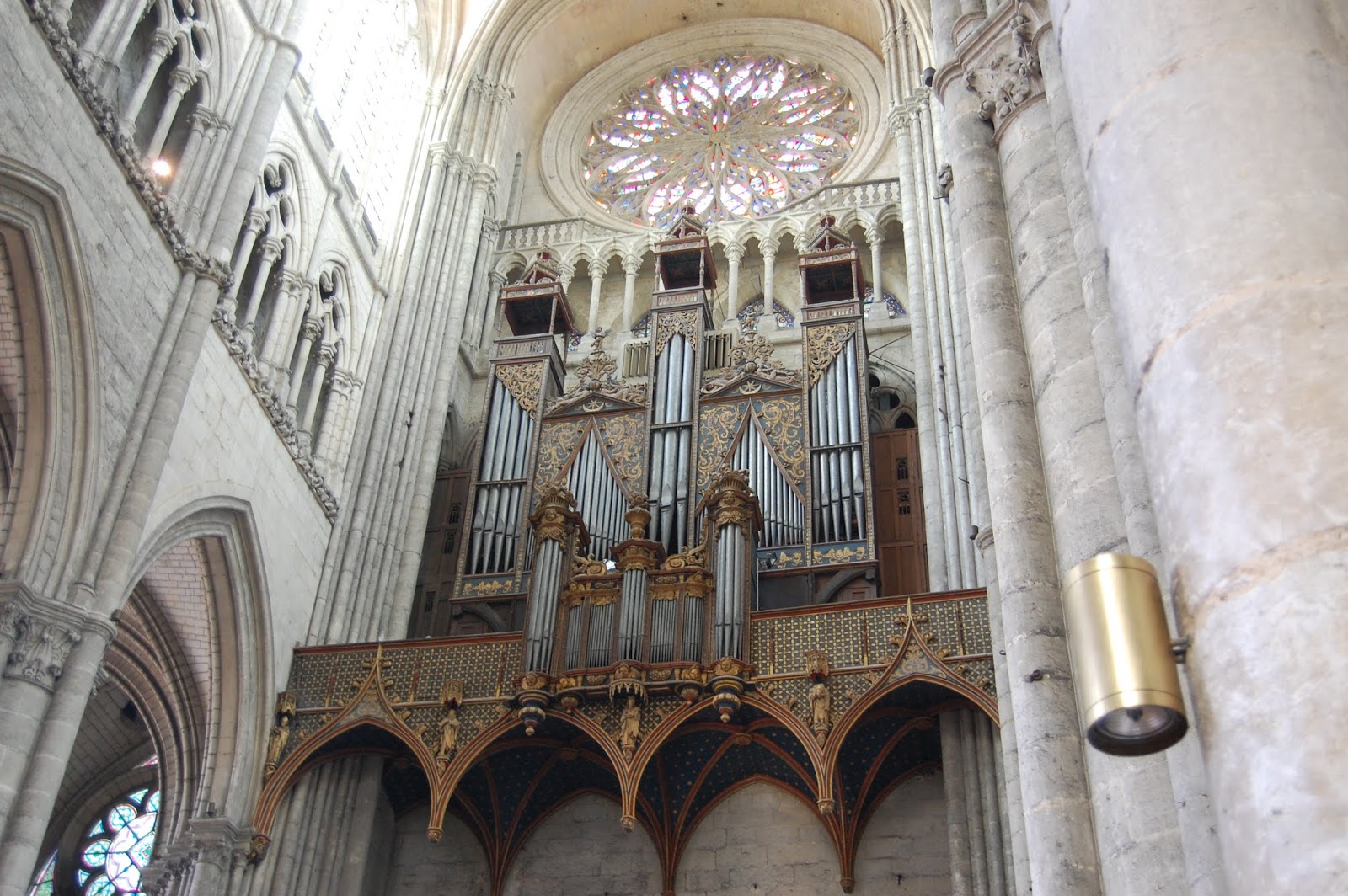
The next morning we visited and went inside just before Sunday mass. The light from the newly-risen sun created a wonderful space inside the cathedral.




The nighttime light show. I didn't see it live - these pictures are from Judith's phone.
While some of the effects are random, it seems or just use the west end of the cathedral as a huge screen, the most impressive effects were when the figures around the three doors were coloured.


These colours are based on detailed research. Fragments of paint found by specialists indicate the original painted polychrome look of the west end of the building.
The next morning we visited and went inside just before Sunday mass. The light from the newly-risen sun created a wonderful space inside the cathedral.


Sunday, 8 May 2011
Montreuil


On the other hand, the countryside around Saint-Josse, where we were staying, was warm and wonderful. This site being what it is, here is a local tree.


Saturday, 30 October 2010
Go, Litel booke.

Amazingly, it’s now been rendered physical. Turned into a book (Geoffrey Chaucer Hath A Blog: Medieval Studies and New Media).
So I had to buy it.
Certes yt is somethynge of a Curate’s egge. Ich kan followen the speche of the aucteurs – but yt is peraventur not alweys sich good mattere.
The extracts from the original blog are – mostly – very funny. But the book has been published under the ‘New Middle Ages’ imprint- which defines itself as ‘ a series dedicated to the pluridisciplinary (sic) studies of medieval cultures, with particular emphasis on recuperating women’s history and on feminist and gender analyses. This peer-reviewed series includes both scholarly monographs and essay collections’.
Clearly this book falls into the second category. And the problem it has is that some of the essays and other ancillary pieces just aren’t that good. Old medieval jokes I heard told once. A discussion whether medievalists are more humorous than other academics. And one or two of the better pieces could do with more careful editing. Despite its subtitle there is also little reflection on the impact of new media on medieval studies, over and above simple notions of efficacy and instrumentality.
And yet I can’t do anything but recommend it. Because the Blog extracts are beguiling, and for the better of the more academic essays. For Chaucer’s ‘appeal’ against Gower (‘… hereof Ich appeale thee John Gower thou art a wanker’). And also for John Gower’s witty introductory poem (‘Why Ye Sholde Nat Rede this Booke’).
So on balance I have to say: go and read it. Soon.
Sunday, 19 September 2010
Lanes
Terry Jones appears to be one of those people destined for National Treasurehood. I've been reading Barbarians, in which he notes that Roman thoroughfares (stone, wide, straight) are called roads, but the Celtic equivalent (wooden, wide, straight) are mere trackways.
Which got me thinking. When did the word 'Lane' - a (usually narrow) way between hedges, etc - become re-used to refer to one band of a major road or motorway (as in 'passing lane' or 'inside lane')? We've gotten used to it, and it feels 'natural' now, but I have no real idea how old the usage is. Any thoughts?
Which got me thinking. When did the word 'Lane' - a (usually narrow) way between hedges, etc - become re-used to refer to one band of a major road or motorway (as in 'passing lane' or 'inside lane')? We've gotten used to it, and it feels 'natural' now, but I have no real idea how old the usage is. Any thoughts?
Friday, 13 August 2010
Poem of the Week
The General Prologue to the Canterbury Tales
Geoffrey Chaucer
Whan that aprill with his shoures soote
The droghte of march hath perced to the roote,
And bathed every veyne in swich licour
Of which vertu engendred is the flour;
Whan zephirus eek with his sweete breeth
Inspired hath in every holt and heeth
Tendre croppes, and the yonge sonne
Hath in the ram his halve cours yronne,
And smale foweles maken melodye,
That slepen al the nyght with open ye
(so priketh hem nature in hir corages);
Thanne longen folk to goon on pilgrimages,
And palmeres for to seken straunge strondes,
To ferne halwes, kowthe in sondry londes;
And specially from every shires ende
Of engelond to caunterbury they wende,
The hooly blisful martir for to seke,
That hem hath holpen whan that they were seeke.
Bifil that in that seson on a day,
In southwerk at the tabard as I lay
Redy to wenden on my pilgrymage
To caunterbury with ful devout corage,
At nyght was come into that hostelrye
Wel nyne and twenty in a compaignye,
Of sondry folk, by aventure yfalle
In felaweshipe, and pilgrimes were they alle,
That toward caunterbury wolden ryde.
The chambres and the stables weren wyde,
And wel we weren esed atte beste.
And shortly, whan the sonne was to reste,
So hadde I spoken with hem everichon
That I was of hir felaweshipe anon,
And made forward erly for to ryse,
To take oure wey ther as I yow devyse.
But nathelees, whil I have tyme and space,
Er that I ferther in this tale pace,
Me thynketh it acordaunt to resoun
To telle yow al the condicioun
Of ech of hem, so as it semed me,
And whiche they weren, and of what degree,
And eek in what array that they were inne;
And at a knyght than wol I first bigynne.
A knyght ther was, and that a worthy man,
That fro the tyme that he first bigan
To riden out, he loved chivalrie,
Trouthe and honour, fredom and curteisie.
Ful worthy was he in his lordes werre,
And therto hadde he riden, no man ferre,
As wel in cristendom as in hethenesse,
And evere honoured for his worthynesse.
At alisaundre he was whan it was wonne.
Ful ofte tyme he hadde the bord bigonne
Aboven alle nacions in pruce;
In lettow hadde he reysed and in ruce,
No cristen man so ofte of his degree.
In gernade at the seege eek hadde he be
Of algezir, and riden in belmarye.
At lyeys was he and at satalye,
Whan they were wonne; and in the grete see
At many a noble armee hadde he be.
At mortal batailles hadde he been fiftene,
And foughten for oure feith at tramyssene
In lystes thries, and ay slayn his foo.
This ilke worthy knyght hadde been also
Somtyme with the lord of palatye
Agayn another hethen in turkye.
And everemoore he hadde a sovereyn prys;
And though that he were worthy, he was wys,
And of his port as meeke as is a mayde.
He nevere yet no vileynye ne sayde
In al his lyf unto no maner wight.
He was a verray, parfit gentil knyght.
But, for to tellen yow of his array,
His hors were goode, but he was nat gay.
Of fustian he wered a gypon
Al bismotered with his habergeon,
For he was late ycome from his viage,
And wente for to doon his pilgrymage.
With hym ther was his sone, a yong squier,
A lovyere and a lusty bacheler,
With lokkes crulle as they were leyd in presse.
Of twenty yeer of age he was, I gesse.
Of his stature he was of evene lengthe,
And wonderly delyvere, and of greet strengthe.
And he hadde been somtyme in chyvachie
In flaundres, in artoys, and pycardie,
And born hym weel, as of so litel space,
In hope to stonden in his lady grace.
Embrouded was he, as it were a meede
Al ful of fresshe floures, whyte and reede.
Syngynge he was, or floytynge, al the day;
He was as fressh as is the month of may.
Short was his gowne, with sleves longe and wyde.
Wel koude he sitte on hors and faire ryde.
He koude songes make and wel endite,
Juste and eek daunce, and weel purtreye and write.
So hoote he lovede that by nyghtertale.
He sleep namoore than dooth a nyghtyngale.
Curteis he was, lowely, and servysable,
And carf biforn his fader at the table.
A yeman hadde he and servantz namo
At that tyme, for hym liste ride so,
And he was clad in cote and hood of grene.
A sheef of pecok arwes, bright and kene,
Under his belt he bar ful thriftily,
(wel koude he dresse his takel yemanly:
His arwes drouped noght with fetheres lowe)
And in his hand he baar a myghty bowe.
A not heed hadde he, with a broun visage.
Of wodecraft wel koude he al the usage.
Upon his arm he baar a gay bracer,
And by his syde a swerd and a bokeler,
And on that oother syde a gay daggere
Harneised wel and sharp as point of spere;
A cristopher on his brest of silver sheene.
An horn he bar, the bawdryk was of grene;
A forster was he, soothly, as I gesse.
Ther was also a nonne, a prioresse,
That of hir smylyng was ful symple and coy;
Hire gretteste ooth was but by seinte loy;
And she was cleped madame eglentyne.
Ful weel she soong the service dyvyne,
Entuned in hir nose ful semely,
And frenssh she spak ful faire and fetisly,
After the scole of stratford atte bowe,
For frenssh of parys was to hire unknowe.
At mete wel ytaught was she with alle:
She leet no morsel from hir lippes falle,
Ne wette hir fyngres in hir sauce depe;
Wel koude she carie a morsel and wel kepe
That no drope ne fille upon hire brest.
In curteisie was set ful muchel hir lest.
Hir over-lippe wyped she so clene
That in hir coppe ther was no ferthyng sene
Of grece, whan she dronken hadde hir draughte.
Ful semely after hir mete she raughte.
And sikerly she was of greet desport,
And ful plesaunt, and amyable of port,
And peyned hire to countrefete cheere
Of court, and to been estatlich of manere,
And to ben holden digne of reverence.
But, for to speken of hire conscience,
She was so charitable and so pitous
She wolde wepe, if that she saugh a mous
Kaught in a trappe, if it were deed or bledde.
Of smale houndes hadde she that she fedde
With rosted flessh, or milk and wastel-breed.
But soore wepte she if oon of hem were deed,
Or if men smoot it with a yerde smerte;
And al was conscience and tendre herte.
Ful semyly hir wympul pynched was,
Hir nose tretys, hir eyen greye as glas,
Hir mouth ful smal, and therto softe and reed;
But sikerly she hadde a fair forheed;
It was almoost a spanne brood, I trowe;
For, hardily, she was nat undergrowe.
Ful fetys was hir cloke, as I was war.
Of smal coral aboute hire arm she bar
A peire of bedes, gauded al with grene,
And theron heng a brooch of gold ful sheene,
On which ther was first write a crowned a,
And after amor vincit omnia.
Another nonne with hire hadde she,
That was hir chapeleyne, and preestes thre.
A monk ther was, a fair for the maistrie,
An outridere, that lovede venerie,
A manly man, to been an abbot able.
Ful many a deyntee hors hadde he in stable,
And whan he rood, men myghte his brydel heere
Gynglen in a whistlynge wynd als cleere
And eek as loude as dooth the chapel belle.
Ther as this lord was kepere of the celle,
The reule of seint maure or of seint beneit,
By cause that it was old and somdel streit
This ilke monk leet olde thynges pace,
And heeld after the newe world the space.
He yaf nat of that text a pulled hen,
That seith that hunters ben nat hooly men,
Ne that a monk, whan he is recchelees,
Is likned til a fissh that is waterlees, --
This is to seyn, a monk out of his cloystre.
But thilke text heeld he nat worth an oystre;
And I seyde his opinion was good.
What sholde he studie and make hymselven wood,
Upon a book in cloystre alwey to poure,
Or swynken with his handes, and laboure,
As austyn bit? how shal the world be served?
Lat austyn have his swynk to hym reserved!
Therfore he was a prikasour aright:
Grehoundes he hadde as swift as fowel in flight;
Of prikyng and of huntyng for the hare
Was al his lust, for no cost wolde he spare.
I seigh his sleves purfiled at the hond
With grys, and that the fyneste of a lond;
And, for to festne his hood under his chyn,
He hadde of gold ywroght a ful curious pyn;
A love-knotte in the gretter ende ther was.
His heed was balled, that shoon as any glas,
And eek his face, as he hadde been enoynt.
He was a lord ful fat and in good poynt;
His eyen stepe, and rollynge in his heed,
That stemed as a forneys of a leed;
His bootes souple, his hors in greet estaat.
Now certeinly he was a fair prelaat;
He was nat pale as a forpyned goost.
A fat swan loved he best of any roost.
His palfrey was as broun as is a berye.
A frere ther was, a wantowne and a merye,
A lymytour, a ful solempne man.
In alle the ordres foure is noon that kan
So muchel of daliaunce and fair langage.
He hadde maad ful many a mariage
Of yonge wommen at his owene cost.
Unto his ordre he was a noble post.
Ful wel biloved and famulier was he
With frankeleyns over al in his contree,
And eek with worthy wommen of the toun;
For he hadde power of confessioun,
As seyde hymself, moore than a curat,
For of his ordre he was licenciat.
Ful swetely herde he confessioun,
And plesaunt was his absolucioun:
He was an esy man to yeve penaunce,
Ther as he wiste to have a good pitaunce.
For unto a povre ordre for to yive
Is signe that a man is wel yshryve;
For if he yaf, he dorste make avaunt,
He wiste that a man was repentaunt;
For many a man so hard is of his herte,
He may nat wepe, althogh hym soore smerte.
Therfore in stede of wepynge and preyeres
Men moote yeve silver to the povre freres.
His typet was ay farsed ful of knyves
And pynnes, for to yeven faire wyves.
And certeinly he hadde a murye note:
Wel koude he synge and pleyen on a rote;
Of yeddynges he baar outrely the pris.
His nekke whit was as the flour-de-lys;
Therto he strong was as a champioun.
He knew the tavernes wel in every toun
And everich hostiler and tappestere
Bet than a lazar or a beggestere;
For unto swich a worthy man as he
Acorded nat, as by his facultee,
To have with sike lazars aqueyntaunce.
It is nat honest, it may nat avaunce,
For to deelen with no swich poraille,
But al with riche and selleres of vitaille.
And over al, ther as profit sholde arise,
Curteis he was and lowely of servyse.
Ther nas no man nowher so vertuous.
He was the beste beggere in his hous;
(and yaf a certeyne ferme for the graunt;
Noon of his bretheren cam ther in his haunt;)
For thogh a wydwe hadde noght a sho,
So plesaunt was his in principio,
Yet wolde he have a ferthyng, er he wente.
His purchas was wel bettre than his rente.
And rage he koude, as it were right a whelp .
In love-dayes ther koude he muchel help ,
For ther he was nat lyk a cloysterer
With a thredbare cope, as is a povre scoler,
But he was lyk a maister or a pope.
Of double worstede was his semycope,
That rounded as a belle out of the presse.
Somwhat he lipsed, for his wantownesse,
To make his englissh sweete upon his tonge;
And in his harpyng, whan that he hadde songe,
His eyen twynkled in his heed aryght,
As doon the sterres in the frosty nyght.
This worthy lymytour was cleped huberd.
A marchant was ther with a forked berd,
In mottelee, and hye on horse he sat;
Upon his heed a flaundryssh bever hat,
His bootes clasped faire and fetisly.
His resons he spak ful solempnely,
Sownynge alwey th' encrees of his wynnyng
He wolde the see were kept for any thyng
Bitwixe middelburgh and orewelle.
Wel koude he in eschaunge sheeldes selle.
This worthy man ful wel his wit bisette:
Ther wiste no wight that he was in dette,
So estatly was he of his governaunce
With his bargaynes and with his chevyssaunce.
For sothe he was a worthy man with alle,
But, sooth to seyn, I noot how men hym calle.
A clerk ther was of oxenford also,
That unto logyk hadde longe ygo.
As leene was his hors as is a rake,
And he nas nat right fat, I undertake,
But looked holwe, and therto sobrely.
Ful thredbare was his overeste courtepy;
For he hadde geten hym yet no benefice,
Ne was so worldly for to have office.
For hym was levere have at his beddes heed
Twenty bookes, clad in blak or reed,
Of aristotle and his philosophie,
Than robes riche, or fithele, or gay sautrie.
But al be that he was a philosophre,
Yet hadde he but litel gold in cofre;
But al that he myghte of his freendes hente,
On bookes and on lernynge he it spente,
And bisily gan for the soules preye
Of hem that yaf hym wherwith to scoleye.
Of studie took he moost cure and moost heede,
Noght o word spak he moore than was neede,
And that was seyd in forme and reverence,
And short and quyk and ful of hy sentence;
Sownynge in moral vertu was his speche,
And gladly wolde he lerne and gladly teche.
A sergeant of the lawe, war and wys,
That often hadde been at the parvys,
Ther was also, ful riche of excellence.
Discreet he was and of greet reverence --
He semed swich, his wordes weren so wise.
Justice he was ful often in assise,
By patente and by pleyn commissioun.
For his science and for his heigh renoun,
Of fees and robes hadde he many oon.
So greet a purchasour was nowher noon:
Al was fee symple to hym in effect;
His purchasyng myghte nat been infect.
Nowher so bisy a man as he ther nas,
And yet he semed bisier than he was.
In termes hadde he caas and doomes alle
That from the tyme of kyng william were falle.
Therto he koude endite, and make a thyng,
Ther koude no wight pynche at his writyng;
And every statut koude he pleyn by rote.
He rood but hoomly in a medlee cote.
Girt with a ceint of silk, with barres smale;
Of his array telle I no lenger tale.
A frankeleyn was in his compaignye.
Whit was his berd as is the dayesye;
Of his complexioun he was sangwyn.
Wel loved he by the morwe a sop in wyn;
To lyven in delit was evere his wone,
For he was epicurus owene sone,
That heeld opinioun that pleyn delit
Was verray felicitee parfit.
An housholdere, and that a greet, was he;
Seint julian he was in his contree.
His breed, his ale, was alweys after oon;
A bettre envyned man was nowher noon.
Withoute bake mete was nevere his hous
Of fissh and flessh, and that so plentevous,
It snewed in his hous of mete and drynke,
Of alle deyntees that men koude thynke.
After the sondry sesons of the yeer,
So chaunged he his mete and his soper.
Ful many a fat partrich hadde he in muwe,
And many a breem and many a luce in stuwe.
Wo was his cook but if his sauce were
Poynaunt and sharp, and redy al his geere.
His table dormant in his halle alway
Stood redy covered al the longe day.
At sessiouns ther was he lord and sire;
Ful ofte tyme he was knyght of the shire.
An anlaas and a gipser al of silk
Heeng at his girdel, whit as morne milk.
A shirreve hadde he been, and a contour.
Was nowher swich a worthy vavasour.
An haberdasshere and a carpenter,
A webbe, a dyere, and a tapycer, --
And they were clothed alle in o lyveree
Of a solempne and a greet fraternitee.
Ful fressh and newe hir geere apiked was;
Hir knyves were chaped noght with bras
But al with silver; wroght ful clene and weel
Hire girdles and hir pouches everydeel.
Wel semed ech of hem a fair burgeys
To sitten in a yeldehalle on a deys.
Everich, for the wisdom that he kan,
Was shaply for to been an alderman.
For catel hadde they ynogh and rente,
And eek hir wyves wolde it wel assente;
And elles certeyn were they to blame.
It is ful fair to been ycleped madame,
And goon to vigilies al bifore,
And have a mantel roialliche ybore.
A cook they hadde with hem for the nones
To boille the chiknes with the marybones,
And poudre-marchant tart and galyngale.
Wel koude he knowe a draughte of londoun ale.
He koude rooste, and sethe, and broille, and frye,
Maken mortreux, and wel bake a pye.
But greet harm was it, as it thoughte me,
That on his shyne a mormal hadde he.
For blankmanger, that made he with the beste.
A shipman was ther, wonynge fer by weste;
For aught I woot, he was of dertemouthe.
He rood upon a rounce, as he kouthe,
In a gowne of faldyng to the knee.
A daggere hangynge on a laas hadde he
Aboute his nekke, under his arm adoun.
The hoote somer hadde maad his hewe al broun;
And certeinly he was a good felawe.
Ful many a draughte of wyn had he ydrawe
Fro burdeux-ward, whil that the chapmen sleep.
Of nyce conscience took he no keep.
If that he faught, and hadde the hyer hond,
By water he sente hem hoom to every lond.
But of his craft to rekene wel his tydes,
His stremes, and his daungers hym bisides,
His herberwe, and his moone, his lodemenage,
Ther nas noon swich from hulle to cartage.
Hardy he was and wys to undertake;
With many a tempest hadde his berd been shake.
He knew alle the havenes, as they were,
Fro gootlond to the cape of fynystere,
And every cryke in britaigne and in spayne.
His barge ycleped was the maudelayne.
With us ther was a doctour of phisik;
In al this world ne was the noon hym lik,
To speke of phisik and of surgerye
For he was grounded in astronomye.
He kepte his pacient a ful greet deel
In houres by his magyk natureel.
Wel koude he fortunen the ascendent
Of his ymages for his pacient.
He knew the cause of everich maladye,
Were it of hoot, or coold, or moyste, or drye,
And where they engendred, and of what humour.
He was a verray, parfit praktisour:
The cause yknowe, and of his harm the roote,
Anon he yaf the sike man his boote.
Ful redy hadde he his apothecaries
To sende hym drogges and his letuaries,
For ech of hem made oother for to wynne --
Hir frendshipe nas nat newe to bigynne.
Wel knew he the olde esculapius,
And deyscorides, and eek rufus,
Olde ypocras, haly, and galyen,
Serapion, razis, and avycen,
Averrois, damascien, and constantyn,
Bernard, and gatesden, and gilbertyn.
Of his diete mesurable was he,
For it was of no superfluitee,
But of greet norissyng and digestible.
His studie was but litel on the bible.
In sangwyn and in pers he clad was al,
Lyned with taffata and with sendal;
And yet he was but esy of dispence;
He kepte that he wan in pestilence.
For gold in phisik is a cordial,
Therefore he lovede gold in special.
A good wif was ther of biside bathe,
But she was somdel deef, and that was scathe.
Of clooth-makyng she hadde swich an haunt,
She passed hem of ypres and of gaunt.
In al the parisshe wif ne was ther noon
That to the offrynge bifore hire sholde goon;
And if ther dide, certeyn so wrooth was she,
That she was out of alle charitee.
Hir coverchiefs ful fyne weren of ground;
I dorste swere they weyeden ten pound
That on a sonday weren upon hir heed.
Hir hosen weren of fyn scarlet reed,
Ful streite yteyd, and shoes ful moyste and newe.
Boold was hir face, and fair, and reed of hewe.
She was a worthy womman al hir lyve:
Housbondes at chirche dore she hadde fyve,
Withouten oother compaignye in youthe, --
But therof nedeth nat to speke as nowthe.
And thries hadde she been at jerusalem;
She hadde passed many a straunge strem;
At rome she hadde been, and at boloigne,
In galice at seint-jame, and at coloigne.
She koude muchel of wandrynge by the weye.
Gat-tothed was she, soothly for to seye.
Upon an amblere esily she sat,
Ywympled wel, and on hir heed an hat
As brood as is a bokeler or a targe;
A foot-mantel aboute hir hipes large,
And on hir feet a paire of spores sharpe.
In felaweshipe wel koude she laughe and carpe.
Of remedies of love she knew per chaunce,
For she koude of that art the olde daunce.
A good man was ther of religioun,
And was a povre persoun of a toun,
But riche he was of hooly thoght and werk.
He was also a lerned man, a clerk,
That cristes gospel trewely wolde preche;
His parisshens devoutly wolde he teche.
Benygne he was, and wonder diligent,
And in adversitee ful pacient,
And swich he was ypreved ofte sithes.
Ful looth were hym to cursen for his tithes,
But rather wolde he yeven, out of doute,
Unto his povre parisshens aboute
Of his offryng and eek of his substaunce.
He koude in litel thyng have suffisaunce.
Wyd was his parisshe, and houses fer asonder,
But he ne lefte nat, for reyn ne thonder,
In siknesse nor in meschief to visite
The ferreste in his parisshe, muche and lite,
Upon his feet, and in his hand a staf.
This noble ensample to his sheep he yaf,
That first he wroghte, and afterward he taughte.
Out of the gospel he tho wordes caughte,
And this figure he added eek therto,
That if gold ruste, what shal iren do?
For if a preest be foul, on whom we truste,
No wonder is a lewed man to ruste;
And shame it is, if a prest take keep,
A shiten shepherde and a clene sheep.
Wel oghte a preest ensample for to yive,
By his clennesse, how that his sheep sholde lyve.
He sette nat his benefice to hyre
And leet his sheep encombred in the myre
And ran to londoun unto seinte poules
To seken hym a chaunterie for soules,
Or with a bretherhed to been withholde;
But dwelte at hoom, and kepte wel his folde,
So that the wolf ne made it nat myscarie;
He was a shepherde and noght a mercenarie.
And though he hooly were and vertuous,
He was to synful men nat despitous,
Ne of his speche daungerous ne digne,
But in his techyng discreet and benygne.
To drawen folk to hevene by fairnesse,
By good ensample, this was his bisynesse.
But it were any persone obstinat,
What so he were, of heigh or lough estat,
Hym wolde he snybben sharply for the nonys.
A bettre preest I trowe that nowher noon ys.
He waited after no pompe and reverence,
Ne maked him a spiced conscience,
But cristes loore and his apostles twelve
He taughte, but first he folwed it hymselve.
With hym ther was a plowman, was his brother,
That hadde ylad of dong ful many a fother;
A trewe swynkere and a good was he,
Lyvynge in pees and parfit charitee.
God loved he best with al his hoole herte
At alle tymes, thogh him gamed or smerte,
And thanne his neighebor right as hymselve.
He wolde thresshe, and therto dyke and delve,
For cristes sake, for every povre wight,
Withouten hire, if it lay in his myght.
His tithes payde he ful faire and wel,
Bothe of his propre swynk and his catel.
In a tabard he rood upon a mere.
Ther was also a reve, and a millere,
A somnour, and a pardoner also,
A maunciple, and myself -- ther were namo.
The millere was a stout carl for the nones;
Ful byg he was of brawn, and eek of bones.
That proved wel, for over al ther he cam,
At wrastlynge he wolde have alwey the ram.
He was short-sholdred, brood, a thikke knarre;
Ther was no dore that he nolde heve of harre,
Or breke it at a rennyng with his heed.
His berd as any sowe or fox was reed,
And therto brood, as though it were a spade.
Upon the cop right of his nose he hade
A werte, and theron stood a toft of herys,
Reed as the brustles of a sowes erys;
His nosethirles blake were and wyde.
A swerd and bokeler bar he by his syde.
His mouth as greet was as a greet forneys.
He was a janglere and a goliardeys,
And that was moost of synne and harlotries.
Wel koude he stelen corn and tollen thries;
And yet he hadde a thombe of gold, pardee.
A whit cote and a blew hood wered he.
A baggepipe wel koude he blowe and sowne,
And therwithal he broghte us out of towne.
A gentil maunciple was ther of a temple,
Of which achatours myghte take exemple
For to be wise in byynge of vitaille;
For wheither that he payde or took by taille,
Algate he wayted so in his achaat
That he was ay biforn and in good staat.
Now is nat that of God a ful fair grace
That swich a lewed mannes wit shal pace
The wisdom of an heep of lerned men?
Of maistres hadde he mo than thries ten,
That weren of lawe expert and curious,
Of which ther were a duszeyne in that hous
Worthy to been stywardes of rente and lond
Of any lord that is in engelond,
To make hym lyve by his propre good
In honour dettelees (but if he were wood),
Or lyve as scarsly as hym list desire;
And able for to help en al a shire
In any caas that myghte falle or happe;
And yet this manciple sette hir aller cappe.
The reve was a sclendre colerik man.
His berd was shave as ny as ever he kan;
His heer was by his erys ful round yshorn;
His top was dokked lyk a preest biforn
Ful longe were his legges and ful lene,
Ylyk a staf, ther was no calf ysene.
Wel koude he kepe a gerner and a bynne;
Ther was noon auditour koude on him wynne.
Wel wiste he by the droghte and by the reyn
The yeldynge of his seed and of his greyn.
His lordes sheep, his neet, his dayerye,
His swyn, his hors, his stoor, and his pultrye
Was hoolly in this reves governynge,
And by his covenant yaf the rekenynge,
Syn that his lord was twenty yeer of age.
Ther koude no man brynge hym in arrerage.
Ther nas baillif, ne hierde, nor oother hyne,
That he ne knew his sleighte and his covyne;
They were adrad of hym as of the deeth.
His wonyng was ful faire upon an heeth;
With grene trees yshadwed was his place.
He koude bettre than his lord purchace.
Ful riche he was astored pryvely:
His lord wel koude he plesen subtilly,
To yeve and lene hym of his owene good,
And have a thank, and yet a cote and hood.
In youthe he hadde lerned a good myster;
He was a wel good wrighte, a carpenter.
This reve sat upon a ful good stot,
That was al pomely grey and highte scot.
A long surcote of pers upon he hade,
And by his syde he baar a rusty blade.
Of northfolk was this reve of which I telle,
Biside a toun men clepen baldeswelle.
Tukked he was as is a frere aboute,
And evere he rood the hyndreste of oure route.
A somonour was ther with us in that place,
That hadde a fyr-reed cherubynnes face,
For saucefleem he was, with eyen narwe.
As hoot he was and lecherous as a sparwe,
With scalled browes blake and piled berd.
Of his visage children were aferd.
Ther nas quyk-silver, lytarge, ne brymstoon,
Boras, ceruce, ne oille of tartre noon;
Ne oynement that wolde clense and byte,
That hym myghte help en of his whelkes white,
Nor of the knobbes sittynge on his chekes.
Wel loved he garleek, oynons, and eek lekes,
And for to drynken strong wyn, reed as blood;
Thanne wolde he speke and crie as he were wood.
And whan that he wel dronken hadde the wyn,
Thanne wolde he speke no word but latyn.
A fewe termes hadde he, two or thre,
That he had lerned out of som decree --
No wonder is, he herde it al the day;
And eek ye knowen wel how that a jay
Kan clepen watte as wel as kan the pope.
But whoso koude in oother thyng hym grope,
Thanne hadde he spent al his philosophie;
Ay questio quid iuris wolde he crie.
He was a gentil harlot and a kynde;
A bettre felawe sholde men noght fynde.
He wolde suffre for a quart of wyn
A good felawe to have his concubyn
A twelf month, and excuse hym atte fulle;
Ful prively a fynch eek koude he pulle.
And if he foond owher a good felawe,
He wolde techen him to have noon awe
In swich caas of the ercedekenes curs,
But if a mannes soule were in his purs;
For in his purs he sholde ypunysshed be.
Purs is the ercedekenes helle, seyde he.
But wel I woot he lyed right in dede;
Of cursyng oghte ech gilty man him drede,
For curs wol slee right as assoillyng savith,
And also war hym of a significavit.
In daunger hadde he at his owene gise
The yonge girles of the diocise,
And knew hir conseil, and was al hir reed.
A gerland hadde he set upon his heed
As greet as it were for an ale-stake.
A bokeleer hadde he maad hym of a cake.
With hym ther rood a gentil pardoner
Of rouncivale, his freend and his compeer,
That streight was comen fro the court of rome.
Ful loude he soong com hider, love, to me!
This somonour bar to hym a stif burdoun;
Was nevere trompe of half so greet a soun.
This pardoner hadde heer as yelow as wex,
But smothe it heeng as dooth a strike of flex;
By ounces henge his lokkes that he hadde,
And therwith he his shuldres overspradde;
But thynne it lay, by colpons oon and oon.
But hood, for jolitee, wered he noon,
For it was trussed up in his walet.
Hym thoughte he rood al of the newe jet;
Dischevelee, save his cappe, he rood al bare.
Swiche glarynge eyen hadde he as an hare.
A vernycle hadde he sowed upon his cappe.
His walet lay biforn hym in his lappe,
Bretful of pardoun, comen from rome al hoot.
A voys he hadde as smal as hath a goot.
No berd hadde he, ne nevere sholde have;
As smothe it was as it were late shave.
I trowe he were a geldyng or a mare.
But of his craft, fro berwyk into ware,
Ne was ther swich another pardoner
For in his male he hadde a pilwe-beer,
Which that he seyde was oure lady veyl:
He seyde he hadde a gobet of the seyl
That seint peter hadde, whan that he wente
Upon the see, til jhesu crist hym hente.
He hadde a croys of latoun ful of stones,
And in a glas he hadde pigges bones.
But with thise relikes, whan that he fond
A povre person dwellynge upon lond,
Upon a day he gat hym moore moneye
Than that the person gat in monthes tweye;
And thus, with feyned flaterye and japes,
He made the person and the peple his apes.
But trewely to tellen atte laste,
He was in chirche a noble ecclesiaste.
Wel koude he rede a lessoun or a storie,
But alderbest he song an offertorie;
For wel he wiste, whan that song was songe,
He moste preche and wel affile his tonge
To wynne silver, as he ful wel koude;
Therefore he song the murierly and loude.
Now have I toold you soothly, in a clause,
Th' estaat, th' array, the nombre, and eek the cause
Why that assembled was this compaignye
In southwerk at this gentil hostelrye
That highte the tabard, faste by the belle.
But now is tyme to yow for to telle
How that we baren us that ilke nyght,
Whan we were in that hostelrie alyght;
And after wol I telle of our viage
And al the remenaunt of oure pilgrimage.
But first I pray yow, of youre curteisye,
That ye n' arette it nat my vileynye,
Thogh that I pleynly speke in this mateere,
To telle yow hir wordes and hir cheere,
Ne thogh I speke hir wordes proprely.
For this ye knowen al so wel as I,
Whoso shal telle a tale after a man,
He moot reherce as ny as evere he kan
Everich a word, if it be in his charge,
Al speke he never so rudeliche and large,
Or ellis he moot telle his tale untrewe,
Or feyne thyng, or fynde wordes newe.
He may nat spare, althogh he were his brother;
He moot as wel seye o word as another.
Crist spak hymself ful brode in hooly writ,
And wel ye woot no vileynye is it.
Eek plato seith, whoso that kan hym rede,
The wordes moote be cosyn to the dede.
Also I prey yow to foryeve it me,
Al have I nat set folk in hir degree
Heere in this tale, as that they sholde stonde.
My wit is short, ye may wel understonde.
Greet chiere made oure hoost us everichon,
And to the soper sette he us anon.
He served us with vitaille at the beste;
Strong was the wyn, and wel to drynke us leste.
A semely man oure hooste was withalle
For to han been a marchal in an halle.
A large man he was with eyen stepe --
A fairer burgeys is ther noon in chepe --
Boold of his speche, and wys, and wel ytaught,
And of manhod hym lakkede right naught.
Eek therto he was right a myrie man,
And after soper pleyen he bigan,
And spak of myrthe amonges othere thynges,
Whan that we hadde maad oure rekenynges,
And seyde thus: now, lordynges, trewely,
Ye been to me right welcome, hertely;
For by my trouthe, if that I shal nat lye,
I saugh nat this yeer so myrie a compaignye
Atones in this herberwe as is now.
Fayn wolde I doon yow myrthe, wiste I how.
And of a myrthe I am right now bythoght,
To doon yow ese, and it shal coste noght.
Ye goon to caunterbury -- God yow speede,
The blisful martir quite yow youre meede!
And wel I woot, as ye goon by the weye,
Ye shapen yow to talen and to pleye;
For trewely, confort ne myrthe is noon
To ride by the weye doumb as a stoon;
And therfore wol I maken yow disport,
As I seyde erst, and doon yow som confort.
And if yow liketh alle by oon assent
For to stonden at my juggement,
And for to werken as I shal yow seye,
To-morwe, whan ye riden by the weye,
Now, by my fader soule that is deed,
But ye be myrie, I wol yeve yow myn heed!
Hoold up youre hondes, withouten moore speche.
Oure conseil was nat longe for to seche.
Us thoughte it was noght worth to make it wys,
And graunted hym withouten moore avys,
And bad him seye his voirdit as hym leste.
Lordynges, quod he, now herkneth for the beste;
But taak it nought, I prey yow, in desdeyn.
This is the poynt, to speken short and pleyn,
That ech of yow, to shorte with oure weye,
In this viage shal telle tales tweye
To caunterbury-ward, I mene it so,
And homward he shal tellen othere two,
Of aventures that whilom han bifalle.
And which of yow that bereth hym best of alle,
That is to seyn, that telleth in this caas
Tales of best sentence and moost solaas,
Shal have a soper at oure aller cost
Heere in this place, sittynge by this post,
Whan that we come agayn fro caunterbury.
And for to make yow the moore mury,
I wol myselven goodly with yow ryde,
Right at myn owene cost, and be youre gyde,
And whoso wole my juggement withseye
Shal paye al that we spenden by the weye.
And if ye vouche sauf that it be so,
Tel me anon, withouten wordes mo,
And I wol erly shape me therfore.
This thyng was graunted, and oure othes swore
With ful glad herte, and preyden hym also
That he wolde vouche sauf for to do so,
And that he wolde been oure governour,
And oure tales juge and reportour,
And sette a soper at a certeyn pris,
And we wol reuled been at his devys
In heigh and lough; and thus by oon assent
We been acorded to his juggement.
And therupon the wyn was fet anon;
We dronken, and to reste wente echon,
Withouten any lenger taryynge.
Amorwe, whan that day bigan to sprynge,
Up roos oure hoost, and was oure aller cok,
And gradrede us togidre alle in a flok,
And forth we riden a litel moore than paas
Unto the wateryng of seint thomas;
And there oure hoost bigan his hors areste
And seyde, lordynges, herkneth, if yow leste.
Ye woot youre foreward, and I it yow recorde.
If even-song and morwe-song accorde,
Lat se now who shal telle the firste tale.
As evere mote I drynke wyn or ale,
Whoso be rebel to my juggement
Shal paye for al that by the wey is spent.
Now draweth cut, er that we ferrer twynne;
He which that hath the shorteste shal bigynne.
Sire knyght, quod he, my mayster and my lord,
Now draweth cut, for that is myn accord.
Cometh neer, quod he, my lady prioresse.
And ye, sire clerk, lat be youre shamefastnesse,
Ne studieth noght; ley hond to, every man!
Anon to drawen every wight bigan,
And shortly for to tellen as it was,
Were it by aventure, or sort, or cas,
The sothe is this, the cut fil to the knyght,
Of which ful blithe and glad was every wyght,
And telle he moste his tale, as was resoun,
By foreward and by composicioun,
As ye han herd; what nedeth wordes mo?
And whan this goode man saugh that it was so,
As he that wys was and obedient
To kepe his foreward by his free assent,
He seyde, syn I shal bigynne the game,
What, welcome be the cut, a goddes name!
Now lat us ryde, and herkneth what I seye.
And with that word we ryden forth oure weye,
And he bigan with right a myrie cheere
His tale anon, and seyde as ye may heere.
Geoffrey Chaucer
Whan that aprill with his shoures soote
The droghte of march hath perced to the roote,
And bathed every veyne in swich licour
Of which vertu engendred is the flour;
Whan zephirus eek with his sweete breeth
Inspired hath in every holt and heeth
Tendre croppes, and the yonge sonne
Hath in the ram his halve cours yronne,
And smale foweles maken melodye,
That slepen al the nyght with open ye
(so priketh hem nature in hir corages);
Thanne longen folk to goon on pilgrimages,
And palmeres for to seken straunge strondes,
To ferne halwes, kowthe in sondry londes;
And specially from every shires ende
Of engelond to caunterbury they wende,
The hooly blisful martir for to seke,
That hem hath holpen whan that they were seeke.
Bifil that in that seson on a day,
In southwerk at the tabard as I lay
Redy to wenden on my pilgrymage
To caunterbury with ful devout corage,
At nyght was come into that hostelrye
Wel nyne and twenty in a compaignye,
Of sondry folk, by aventure yfalle
In felaweshipe, and pilgrimes were they alle,
That toward caunterbury wolden ryde.
The chambres and the stables weren wyde,
And wel we weren esed atte beste.
And shortly, whan the sonne was to reste,
So hadde I spoken with hem everichon
That I was of hir felaweshipe anon,
And made forward erly for to ryse,
To take oure wey ther as I yow devyse.
But nathelees, whil I have tyme and space,
Er that I ferther in this tale pace,
Me thynketh it acordaunt to resoun
To telle yow al the condicioun
Of ech of hem, so as it semed me,
And whiche they weren, and of what degree,
And eek in what array that they were inne;
And at a knyght than wol I first bigynne.
A knyght ther was, and that a worthy man,
That fro the tyme that he first bigan
To riden out, he loved chivalrie,
Trouthe and honour, fredom and curteisie.
Ful worthy was he in his lordes werre,
And therto hadde he riden, no man ferre,
As wel in cristendom as in hethenesse,
And evere honoured for his worthynesse.
At alisaundre he was whan it was wonne.
Ful ofte tyme he hadde the bord bigonne
Aboven alle nacions in pruce;
In lettow hadde he reysed and in ruce,
No cristen man so ofte of his degree.
In gernade at the seege eek hadde he be
Of algezir, and riden in belmarye.
At lyeys was he and at satalye,
Whan they were wonne; and in the grete see
At many a noble armee hadde he be.
At mortal batailles hadde he been fiftene,
And foughten for oure feith at tramyssene
In lystes thries, and ay slayn his foo.
This ilke worthy knyght hadde been also
Somtyme with the lord of palatye
Agayn another hethen in turkye.
And everemoore he hadde a sovereyn prys;
And though that he were worthy, he was wys,
And of his port as meeke as is a mayde.
He nevere yet no vileynye ne sayde
In al his lyf unto no maner wight.
He was a verray, parfit gentil knyght.
But, for to tellen yow of his array,
His hors were goode, but he was nat gay.
Of fustian he wered a gypon
Al bismotered with his habergeon,
For he was late ycome from his viage,
And wente for to doon his pilgrymage.
With hym ther was his sone, a yong squier,
A lovyere and a lusty bacheler,
With lokkes crulle as they were leyd in presse.
Of twenty yeer of age he was, I gesse.
Of his stature he was of evene lengthe,
And wonderly delyvere, and of greet strengthe.
And he hadde been somtyme in chyvachie
In flaundres, in artoys, and pycardie,
And born hym weel, as of so litel space,
In hope to stonden in his lady grace.
Embrouded was he, as it were a meede
Al ful of fresshe floures, whyte and reede.
Syngynge he was, or floytynge, al the day;
He was as fressh as is the month of may.
Short was his gowne, with sleves longe and wyde.
Wel koude he sitte on hors and faire ryde.
He koude songes make and wel endite,
Juste and eek daunce, and weel purtreye and write.
So hoote he lovede that by nyghtertale.
He sleep namoore than dooth a nyghtyngale.
Curteis he was, lowely, and servysable,
And carf biforn his fader at the table.
A yeman hadde he and servantz namo
At that tyme, for hym liste ride so,
And he was clad in cote and hood of grene.
A sheef of pecok arwes, bright and kene,
Under his belt he bar ful thriftily,
(wel koude he dresse his takel yemanly:
His arwes drouped noght with fetheres lowe)
And in his hand he baar a myghty bowe.
A not heed hadde he, with a broun visage.
Of wodecraft wel koude he al the usage.
Upon his arm he baar a gay bracer,
And by his syde a swerd and a bokeler,
And on that oother syde a gay daggere
Harneised wel and sharp as point of spere;
A cristopher on his brest of silver sheene.
An horn he bar, the bawdryk was of grene;
A forster was he, soothly, as I gesse.
Ther was also a nonne, a prioresse,
That of hir smylyng was ful symple and coy;
Hire gretteste ooth was but by seinte loy;
And she was cleped madame eglentyne.
Ful weel she soong the service dyvyne,
Entuned in hir nose ful semely,
And frenssh she spak ful faire and fetisly,
After the scole of stratford atte bowe,
For frenssh of parys was to hire unknowe.
At mete wel ytaught was she with alle:
She leet no morsel from hir lippes falle,
Ne wette hir fyngres in hir sauce depe;
Wel koude she carie a morsel and wel kepe
That no drope ne fille upon hire brest.
In curteisie was set ful muchel hir lest.
Hir over-lippe wyped she so clene
That in hir coppe ther was no ferthyng sene
Of grece, whan she dronken hadde hir draughte.
Ful semely after hir mete she raughte.
And sikerly she was of greet desport,
And ful plesaunt, and amyable of port,
And peyned hire to countrefete cheere
Of court, and to been estatlich of manere,
And to ben holden digne of reverence.
But, for to speken of hire conscience,
She was so charitable and so pitous
She wolde wepe, if that she saugh a mous
Kaught in a trappe, if it were deed or bledde.
Of smale houndes hadde she that she fedde
With rosted flessh, or milk and wastel-breed.
But soore wepte she if oon of hem were deed,
Or if men smoot it with a yerde smerte;
And al was conscience and tendre herte.
Ful semyly hir wympul pynched was,
Hir nose tretys, hir eyen greye as glas,
Hir mouth ful smal, and therto softe and reed;
But sikerly she hadde a fair forheed;
It was almoost a spanne brood, I trowe;
For, hardily, she was nat undergrowe.
Ful fetys was hir cloke, as I was war.
Of smal coral aboute hire arm she bar
A peire of bedes, gauded al with grene,
And theron heng a brooch of gold ful sheene,
On which ther was first write a crowned a,
And after amor vincit omnia.
Another nonne with hire hadde she,
That was hir chapeleyne, and preestes thre.
A monk ther was, a fair for the maistrie,
An outridere, that lovede venerie,
A manly man, to been an abbot able.
Ful many a deyntee hors hadde he in stable,
And whan he rood, men myghte his brydel heere
Gynglen in a whistlynge wynd als cleere
And eek as loude as dooth the chapel belle.
Ther as this lord was kepere of the celle,
The reule of seint maure or of seint beneit,
By cause that it was old and somdel streit
This ilke monk leet olde thynges pace,
And heeld after the newe world the space.
He yaf nat of that text a pulled hen,
That seith that hunters ben nat hooly men,
Ne that a monk, whan he is recchelees,
Is likned til a fissh that is waterlees, --
This is to seyn, a monk out of his cloystre.
But thilke text heeld he nat worth an oystre;
And I seyde his opinion was good.
What sholde he studie and make hymselven wood,
Upon a book in cloystre alwey to poure,
Or swynken with his handes, and laboure,
As austyn bit? how shal the world be served?
Lat austyn have his swynk to hym reserved!
Therfore he was a prikasour aright:
Grehoundes he hadde as swift as fowel in flight;
Of prikyng and of huntyng for the hare
Was al his lust, for no cost wolde he spare.
I seigh his sleves purfiled at the hond
With grys, and that the fyneste of a lond;
And, for to festne his hood under his chyn,
He hadde of gold ywroght a ful curious pyn;
A love-knotte in the gretter ende ther was.
His heed was balled, that shoon as any glas,
And eek his face, as he hadde been enoynt.
He was a lord ful fat and in good poynt;
His eyen stepe, and rollynge in his heed,
That stemed as a forneys of a leed;
His bootes souple, his hors in greet estaat.
Now certeinly he was a fair prelaat;
He was nat pale as a forpyned goost.
A fat swan loved he best of any roost.
His palfrey was as broun as is a berye.
A frere ther was, a wantowne and a merye,
A lymytour, a ful solempne man.
In alle the ordres foure is noon that kan
So muchel of daliaunce and fair langage.
He hadde maad ful many a mariage
Of yonge wommen at his owene cost.
Unto his ordre he was a noble post.
Ful wel biloved and famulier was he
With frankeleyns over al in his contree,
And eek with worthy wommen of the toun;
For he hadde power of confessioun,
As seyde hymself, moore than a curat,
For of his ordre he was licenciat.
Ful swetely herde he confessioun,
And plesaunt was his absolucioun:
He was an esy man to yeve penaunce,
Ther as he wiste to have a good pitaunce.
For unto a povre ordre for to yive
Is signe that a man is wel yshryve;
For if he yaf, he dorste make avaunt,
He wiste that a man was repentaunt;
For many a man so hard is of his herte,
He may nat wepe, althogh hym soore smerte.
Therfore in stede of wepynge and preyeres
Men moote yeve silver to the povre freres.
His typet was ay farsed ful of knyves
And pynnes, for to yeven faire wyves.
And certeinly he hadde a murye note:
Wel koude he synge and pleyen on a rote;
Of yeddynges he baar outrely the pris.
His nekke whit was as the flour-de-lys;
Therto he strong was as a champioun.
He knew the tavernes wel in every toun
And everich hostiler and tappestere
Bet than a lazar or a beggestere;
For unto swich a worthy man as he
Acorded nat, as by his facultee,
To have with sike lazars aqueyntaunce.
It is nat honest, it may nat avaunce,
For to deelen with no swich poraille,
But al with riche and selleres of vitaille.
And over al, ther as profit sholde arise,
Curteis he was and lowely of servyse.
Ther nas no man nowher so vertuous.
He was the beste beggere in his hous;
(and yaf a certeyne ferme for the graunt;
Noon of his bretheren cam ther in his haunt;)
For thogh a wydwe hadde noght a sho,
So plesaunt was his in principio,
Yet wolde he have a ferthyng, er he wente.
His purchas was wel bettre than his rente.
And rage he koude, as it were right a whelp .
In love-dayes ther koude he muchel help ,
For ther he was nat lyk a cloysterer
With a thredbare cope, as is a povre scoler,
But he was lyk a maister or a pope.
Of double worstede was his semycope,
That rounded as a belle out of the presse.
Somwhat he lipsed, for his wantownesse,
To make his englissh sweete upon his tonge;
And in his harpyng, whan that he hadde songe,
His eyen twynkled in his heed aryght,
As doon the sterres in the frosty nyght.
This worthy lymytour was cleped huberd.
A marchant was ther with a forked berd,
In mottelee, and hye on horse he sat;
Upon his heed a flaundryssh bever hat,
His bootes clasped faire and fetisly.
His resons he spak ful solempnely,
Sownynge alwey th' encrees of his wynnyng
He wolde the see were kept for any thyng
Bitwixe middelburgh and orewelle.
Wel koude he in eschaunge sheeldes selle.
This worthy man ful wel his wit bisette:
Ther wiste no wight that he was in dette,
So estatly was he of his governaunce
With his bargaynes and with his chevyssaunce.
For sothe he was a worthy man with alle,
But, sooth to seyn, I noot how men hym calle.
A clerk ther was of oxenford also,
That unto logyk hadde longe ygo.
As leene was his hors as is a rake,
And he nas nat right fat, I undertake,
But looked holwe, and therto sobrely.
Ful thredbare was his overeste courtepy;
For he hadde geten hym yet no benefice,
Ne was so worldly for to have office.
For hym was levere have at his beddes heed
Twenty bookes, clad in blak or reed,
Of aristotle and his philosophie,
Than robes riche, or fithele, or gay sautrie.
But al be that he was a philosophre,
Yet hadde he but litel gold in cofre;
But al that he myghte of his freendes hente,
On bookes and on lernynge he it spente,
And bisily gan for the soules preye
Of hem that yaf hym wherwith to scoleye.
Of studie took he moost cure and moost heede,
Noght o word spak he moore than was neede,
And that was seyd in forme and reverence,
And short and quyk and ful of hy sentence;
Sownynge in moral vertu was his speche,
And gladly wolde he lerne and gladly teche.
A sergeant of the lawe, war and wys,
That often hadde been at the parvys,
Ther was also, ful riche of excellence.
Discreet he was and of greet reverence --
He semed swich, his wordes weren so wise.
Justice he was ful often in assise,
By patente and by pleyn commissioun.
For his science and for his heigh renoun,
Of fees and robes hadde he many oon.
So greet a purchasour was nowher noon:
Al was fee symple to hym in effect;
His purchasyng myghte nat been infect.
Nowher so bisy a man as he ther nas,
And yet he semed bisier than he was.
In termes hadde he caas and doomes alle
That from the tyme of kyng william were falle.
Therto he koude endite, and make a thyng,
Ther koude no wight pynche at his writyng;
And every statut koude he pleyn by rote.
He rood but hoomly in a medlee cote.
Girt with a ceint of silk, with barres smale;
Of his array telle I no lenger tale.
A frankeleyn was in his compaignye.
Whit was his berd as is the dayesye;
Of his complexioun he was sangwyn.
Wel loved he by the morwe a sop in wyn;
To lyven in delit was evere his wone,
For he was epicurus owene sone,
That heeld opinioun that pleyn delit
Was verray felicitee parfit.
An housholdere, and that a greet, was he;
Seint julian he was in his contree.
His breed, his ale, was alweys after oon;
A bettre envyned man was nowher noon.
Withoute bake mete was nevere his hous
Of fissh and flessh, and that so plentevous,
It snewed in his hous of mete and drynke,
Of alle deyntees that men koude thynke.
After the sondry sesons of the yeer,
So chaunged he his mete and his soper.
Ful many a fat partrich hadde he in muwe,
And many a breem and many a luce in stuwe.
Wo was his cook but if his sauce were
Poynaunt and sharp, and redy al his geere.
His table dormant in his halle alway
Stood redy covered al the longe day.
At sessiouns ther was he lord and sire;
Ful ofte tyme he was knyght of the shire.
An anlaas and a gipser al of silk
Heeng at his girdel, whit as morne milk.
A shirreve hadde he been, and a contour.
Was nowher swich a worthy vavasour.
An haberdasshere and a carpenter,
A webbe, a dyere, and a tapycer, --
And they were clothed alle in o lyveree
Of a solempne and a greet fraternitee.
Ful fressh and newe hir geere apiked was;
Hir knyves were chaped noght with bras
But al with silver; wroght ful clene and weel
Hire girdles and hir pouches everydeel.
Wel semed ech of hem a fair burgeys
To sitten in a yeldehalle on a deys.
Everich, for the wisdom that he kan,
Was shaply for to been an alderman.
For catel hadde they ynogh and rente,
And eek hir wyves wolde it wel assente;
And elles certeyn were they to blame.
It is ful fair to been ycleped madame,
And goon to vigilies al bifore,
And have a mantel roialliche ybore.
A cook they hadde with hem for the nones
To boille the chiknes with the marybones,
And poudre-marchant tart and galyngale.
Wel koude he knowe a draughte of londoun ale.
He koude rooste, and sethe, and broille, and frye,
Maken mortreux, and wel bake a pye.
But greet harm was it, as it thoughte me,
That on his shyne a mormal hadde he.
For blankmanger, that made he with the beste.
A shipman was ther, wonynge fer by weste;
For aught I woot, he was of dertemouthe.
He rood upon a rounce, as he kouthe,
In a gowne of faldyng to the knee.
A daggere hangynge on a laas hadde he
Aboute his nekke, under his arm adoun.
The hoote somer hadde maad his hewe al broun;
And certeinly he was a good felawe.
Ful many a draughte of wyn had he ydrawe
Fro burdeux-ward, whil that the chapmen sleep.
Of nyce conscience took he no keep.
If that he faught, and hadde the hyer hond,
By water he sente hem hoom to every lond.
But of his craft to rekene wel his tydes,
His stremes, and his daungers hym bisides,
His herberwe, and his moone, his lodemenage,
Ther nas noon swich from hulle to cartage.
Hardy he was and wys to undertake;
With many a tempest hadde his berd been shake.
He knew alle the havenes, as they were,
Fro gootlond to the cape of fynystere,
And every cryke in britaigne and in spayne.
His barge ycleped was the maudelayne.
With us ther was a doctour of phisik;
In al this world ne was the noon hym lik,
To speke of phisik and of surgerye
For he was grounded in astronomye.
He kepte his pacient a ful greet deel
In houres by his magyk natureel.
Wel koude he fortunen the ascendent
Of his ymages for his pacient.
He knew the cause of everich maladye,
Were it of hoot, or coold, or moyste, or drye,
And where they engendred, and of what humour.
He was a verray, parfit praktisour:
The cause yknowe, and of his harm the roote,
Anon he yaf the sike man his boote.
Ful redy hadde he his apothecaries
To sende hym drogges and his letuaries,
For ech of hem made oother for to wynne --
Hir frendshipe nas nat newe to bigynne.
Wel knew he the olde esculapius,
And deyscorides, and eek rufus,
Olde ypocras, haly, and galyen,
Serapion, razis, and avycen,
Averrois, damascien, and constantyn,
Bernard, and gatesden, and gilbertyn.
Of his diete mesurable was he,
For it was of no superfluitee,
But of greet norissyng and digestible.
His studie was but litel on the bible.
In sangwyn and in pers he clad was al,
Lyned with taffata and with sendal;
And yet he was but esy of dispence;
He kepte that he wan in pestilence.
For gold in phisik is a cordial,
Therefore he lovede gold in special.
A good wif was ther of biside bathe,
But she was somdel deef, and that was scathe.
Of clooth-makyng she hadde swich an haunt,
She passed hem of ypres and of gaunt.
In al the parisshe wif ne was ther noon
That to the offrynge bifore hire sholde goon;
And if ther dide, certeyn so wrooth was she,
That she was out of alle charitee.
Hir coverchiefs ful fyne weren of ground;
I dorste swere they weyeden ten pound
That on a sonday weren upon hir heed.
Hir hosen weren of fyn scarlet reed,
Ful streite yteyd, and shoes ful moyste and newe.
Boold was hir face, and fair, and reed of hewe.
She was a worthy womman al hir lyve:
Housbondes at chirche dore she hadde fyve,
Withouten oother compaignye in youthe, --
But therof nedeth nat to speke as nowthe.
And thries hadde she been at jerusalem;
She hadde passed many a straunge strem;
At rome she hadde been, and at boloigne,
In galice at seint-jame, and at coloigne.
She koude muchel of wandrynge by the weye.
Gat-tothed was she, soothly for to seye.
Upon an amblere esily she sat,
Ywympled wel, and on hir heed an hat
As brood as is a bokeler or a targe;
A foot-mantel aboute hir hipes large,
And on hir feet a paire of spores sharpe.
In felaweshipe wel koude she laughe and carpe.
Of remedies of love she knew per chaunce,
For she koude of that art the olde daunce.
A good man was ther of religioun,
And was a povre persoun of a toun,
But riche he was of hooly thoght and werk.
He was also a lerned man, a clerk,
That cristes gospel trewely wolde preche;
His parisshens devoutly wolde he teche.
Benygne he was, and wonder diligent,
And in adversitee ful pacient,
And swich he was ypreved ofte sithes.
Ful looth were hym to cursen for his tithes,
But rather wolde he yeven, out of doute,
Unto his povre parisshens aboute
Of his offryng and eek of his substaunce.
He koude in litel thyng have suffisaunce.
Wyd was his parisshe, and houses fer asonder,
But he ne lefte nat, for reyn ne thonder,
In siknesse nor in meschief to visite
The ferreste in his parisshe, muche and lite,
Upon his feet, and in his hand a staf.
This noble ensample to his sheep he yaf,
That first he wroghte, and afterward he taughte.
Out of the gospel he tho wordes caughte,
And this figure he added eek therto,
That if gold ruste, what shal iren do?
For if a preest be foul, on whom we truste,
No wonder is a lewed man to ruste;
And shame it is, if a prest take keep,
A shiten shepherde and a clene sheep.
Wel oghte a preest ensample for to yive,
By his clennesse, how that his sheep sholde lyve.
He sette nat his benefice to hyre
And leet his sheep encombred in the myre
And ran to londoun unto seinte poules
To seken hym a chaunterie for soules,
Or with a bretherhed to been withholde;
But dwelte at hoom, and kepte wel his folde,
So that the wolf ne made it nat myscarie;
He was a shepherde and noght a mercenarie.
And though he hooly were and vertuous,
He was to synful men nat despitous,
Ne of his speche daungerous ne digne,
But in his techyng discreet and benygne.
To drawen folk to hevene by fairnesse,
By good ensample, this was his bisynesse.
But it were any persone obstinat,
What so he were, of heigh or lough estat,
Hym wolde he snybben sharply for the nonys.
A bettre preest I trowe that nowher noon ys.
He waited after no pompe and reverence,
Ne maked him a spiced conscience,
But cristes loore and his apostles twelve
He taughte, but first he folwed it hymselve.
With hym ther was a plowman, was his brother,
That hadde ylad of dong ful many a fother;
A trewe swynkere and a good was he,
Lyvynge in pees and parfit charitee.
God loved he best with al his hoole herte
At alle tymes, thogh him gamed or smerte,
And thanne his neighebor right as hymselve.
He wolde thresshe, and therto dyke and delve,
For cristes sake, for every povre wight,
Withouten hire, if it lay in his myght.
His tithes payde he ful faire and wel,
Bothe of his propre swynk and his catel.
In a tabard he rood upon a mere.
Ther was also a reve, and a millere,
A somnour, and a pardoner also,
A maunciple, and myself -- ther were namo.
The millere was a stout carl for the nones;
Ful byg he was of brawn, and eek of bones.
That proved wel, for over al ther he cam,
At wrastlynge he wolde have alwey the ram.
He was short-sholdred, brood, a thikke knarre;
Ther was no dore that he nolde heve of harre,
Or breke it at a rennyng with his heed.
His berd as any sowe or fox was reed,
And therto brood, as though it were a spade.
Upon the cop right of his nose he hade
A werte, and theron stood a toft of herys,
Reed as the brustles of a sowes erys;
His nosethirles blake were and wyde.
A swerd and bokeler bar he by his syde.
His mouth as greet was as a greet forneys.
He was a janglere and a goliardeys,
And that was moost of synne and harlotries.
Wel koude he stelen corn and tollen thries;
And yet he hadde a thombe of gold, pardee.
A whit cote and a blew hood wered he.
A baggepipe wel koude he blowe and sowne,
And therwithal he broghte us out of towne.
A gentil maunciple was ther of a temple,
Of which achatours myghte take exemple
For to be wise in byynge of vitaille;
For wheither that he payde or took by taille,
Algate he wayted so in his achaat
That he was ay biforn and in good staat.
Now is nat that of God a ful fair grace
That swich a lewed mannes wit shal pace
The wisdom of an heep of lerned men?
Of maistres hadde he mo than thries ten,
That weren of lawe expert and curious,
Of which ther were a duszeyne in that hous
Worthy to been stywardes of rente and lond
Of any lord that is in engelond,
To make hym lyve by his propre good
In honour dettelees (but if he were wood),
Or lyve as scarsly as hym list desire;
And able for to help en al a shire
In any caas that myghte falle or happe;
And yet this manciple sette hir aller cappe.
The reve was a sclendre colerik man.
His berd was shave as ny as ever he kan;
His heer was by his erys ful round yshorn;
His top was dokked lyk a preest biforn
Ful longe were his legges and ful lene,
Ylyk a staf, ther was no calf ysene.
Wel koude he kepe a gerner and a bynne;
Ther was noon auditour koude on him wynne.
Wel wiste he by the droghte and by the reyn
The yeldynge of his seed and of his greyn.
His lordes sheep, his neet, his dayerye,
His swyn, his hors, his stoor, and his pultrye
Was hoolly in this reves governynge,
And by his covenant yaf the rekenynge,
Syn that his lord was twenty yeer of age.
Ther koude no man brynge hym in arrerage.
Ther nas baillif, ne hierde, nor oother hyne,
That he ne knew his sleighte and his covyne;
They were adrad of hym as of the deeth.
His wonyng was ful faire upon an heeth;
With grene trees yshadwed was his place.
He koude bettre than his lord purchace.
Ful riche he was astored pryvely:
His lord wel koude he plesen subtilly,
To yeve and lene hym of his owene good,
And have a thank, and yet a cote and hood.
In youthe he hadde lerned a good myster;
He was a wel good wrighte, a carpenter.
This reve sat upon a ful good stot,
That was al pomely grey and highte scot.
A long surcote of pers upon he hade,
And by his syde he baar a rusty blade.
Of northfolk was this reve of which I telle,
Biside a toun men clepen baldeswelle.
Tukked he was as is a frere aboute,
And evere he rood the hyndreste of oure route.
A somonour was ther with us in that place,
That hadde a fyr-reed cherubynnes face,
For saucefleem he was, with eyen narwe.
As hoot he was and lecherous as a sparwe,
With scalled browes blake and piled berd.
Of his visage children were aferd.
Ther nas quyk-silver, lytarge, ne brymstoon,
Boras, ceruce, ne oille of tartre noon;
Ne oynement that wolde clense and byte,
That hym myghte help en of his whelkes white,
Nor of the knobbes sittynge on his chekes.
Wel loved he garleek, oynons, and eek lekes,
And for to drynken strong wyn, reed as blood;
Thanne wolde he speke and crie as he were wood.
And whan that he wel dronken hadde the wyn,
Thanne wolde he speke no word but latyn.
A fewe termes hadde he, two or thre,
That he had lerned out of som decree --
No wonder is, he herde it al the day;
And eek ye knowen wel how that a jay
Kan clepen watte as wel as kan the pope.
But whoso koude in oother thyng hym grope,
Thanne hadde he spent al his philosophie;
Ay questio quid iuris wolde he crie.
He was a gentil harlot and a kynde;
A bettre felawe sholde men noght fynde.
He wolde suffre for a quart of wyn
A good felawe to have his concubyn
A twelf month, and excuse hym atte fulle;
Ful prively a fynch eek koude he pulle.
And if he foond owher a good felawe,
He wolde techen him to have noon awe
In swich caas of the ercedekenes curs,
But if a mannes soule were in his purs;
For in his purs he sholde ypunysshed be.
Purs is the ercedekenes helle, seyde he.
But wel I woot he lyed right in dede;
Of cursyng oghte ech gilty man him drede,
For curs wol slee right as assoillyng savith,
And also war hym of a significavit.
In daunger hadde he at his owene gise
The yonge girles of the diocise,
And knew hir conseil, and was al hir reed.
A gerland hadde he set upon his heed
As greet as it were for an ale-stake.
A bokeleer hadde he maad hym of a cake.
With hym ther rood a gentil pardoner
Of rouncivale, his freend and his compeer,
That streight was comen fro the court of rome.
Ful loude he soong com hider, love, to me!
This somonour bar to hym a stif burdoun;
Was nevere trompe of half so greet a soun.
This pardoner hadde heer as yelow as wex,
But smothe it heeng as dooth a strike of flex;
By ounces henge his lokkes that he hadde,
And therwith he his shuldres overspradde;
But thynne it lay, by colpons oon and oon.
But hood, for jolitee, wered he noon,
For it was trussed up in his walet.
Hym thoughte he rood al of the newe jet;
Dischevelee, save his cappe, he rood al bare.
Swiche glarynge eyen hadde he as an hare.
A vernycle hadde he sowed upon his cappe.
His walet lay biforn hym in his lappe,
Bretful of pardoun, comen from rome al hoot.
A voys he hadde as smal as hath a goot.
No berd hadde he, ne nevere sholde have;
As smothe it was as it were late shave.
I trowe he were a geldyng or a mare.
But of his craft, fro berwyk into ware,
Ne was ther swich another pardoner
For in his male he hadde a pilwe-beer,
Which that he seyde was oure lady veyl:
He seyde he hadde a gobet of the seyl
That seint peter hadde, whan that he wente
Upon the see, til jhesu crist hym hente.
He hadde a croys of latoun ful of stones,
And in a glas he hadde pigges bones.
But with thise relikes, whan that he fond
A povre person dwellynge upon lond,
Upon a day he gat hym moore moneye
Than that the person gat in monthes tweye;
And thus, with feyned flaterye and japes,
He made the person and the peple his apes.
But trewely to tellen atte laste,
He was in chirche a noble ecclesiaste.
Wel koude he rede a lessoun or a storie,
But alderbest he song an offertorie;
For wel he wiste, whan that song was songe,
He moste preche and wel affile his tonge
To wynne silver, as he ful wel koude;
Therefore he song the murierly and loude.
Now have I toold you soothly, in a clause,
Th' estaat, th' array, the nombre, and eek the cause
Why that assembled was this compaignye
In southwerk at this gentil hostelrye
That highte the tabard, faste by the belle.
But now is tyme to yow for to telle
How that we baren us that ilke nyght,
Whan we were in that hostelrie alyght;
And after wol I telle of our viage
And al the remenaunt of oure pilgrimage.
But first I pray yow, of youre curteisye,
That ye n' arette it nat my vileynye,
Thogh that I pleynly speke in this mateere,
To telle yow hir wordes and hir cheere,
Ne thogh I speke hir wordes proprely.
For this ye knowen al so wel as I,
Whoso shal telle a tale after a man,
He moot reherce as ny as evere he kan
Everich a word, if it be in his charge,
Al speke he never so rudeliche and large,
Or ellis he moot telle his tale untrewe,
Or feyne thyng, or fynde wordes newe.
He may nat spare, althogh he were his brother;
He moot as wel seye o word as another.
Crist spak hymself ful brode in hooly writ,
And wel ye woot no vileynye is it.
Eek plato seith, whoso that kan hym rede,
The wordes moote be cosyn to the dede.
Also I prey yow to foryeve it me,
Al have I nat set folk in hir degree
Heere in this tale, as that they sholde stonde.
My wit is short, ye may wel understonde.
Greet chiere made oure hoost us everichon,
And to the soper sette he us anon.
He served us with vitaille at the beste;
Strong was the wyn, and wel to drynke us leste.
A semely man oure hooste was withalle
For to han been a marchal in an halle.
A large man he was with eyen stepe --
A fairer burgeys is ther noon in chepe --
Boold of his speche, and wys, and wel ytaught,
And of manhod hym lakkede right naught.
Eek therto he was right a myrie man,
And after soper pleyen he bigan,
And spak of myrthe amonges othere thynges,
Whan that we hadde maad oure rekenynges,
And seyde thus: now, lordynges, trewely,
Ye been to me right welcome, hertely;
For by my trouthe, if that I shal nat lye,
I saugh nat this yeer so myrie a compaignye
Atones in this herberwe as is now.
Fayn wolde I doon yow myrthe, wiste I how.
And of a myrthe I am right now bythoght,
To doon yow ese, and it shal coste noght.
Ye goon to caunterbury -- God yow speede,
The blisful martir quite yow youre meede!
And wel I woot, as ye goon by the weye,
Ye shapen yow to talen and to pleye;
For trewely, confort ne myrthe is noon
To ride by the weye doumb as a stoon;
And therfore wol I maken yow disport,
As I seyde erst, and doon yow som confort.
And if yow liketh alle by oon assent
For to stonden at my juggement,
And for to werken as I shal yow seye,
To-morwe, whan ye riden by the weye,
Now, by my fader soule that is deed,
But ye be myrie, I wol yeve yow myn heed!
Hoold up youre hondes, withouten moore speche.
Oure conseil was nat longe for to seche.
Us thoughte it was noght worth to make it wys,
And graunted hym withouten moore avys,
And bad him seye his voirdit as hym leste.
Lordynges, quod he, now herkneth for the beste;
But taak it nought, I prey yow, in desdeyn.
This is the poynt, to speken short and pleyn,
That ech of yow, to shorte with oure weye,
In this viage shal telle tales tweye
To caunterbury-ward, I mene it so,
And homward he shal tellen othere two,
Of aventures that whilom han bifalle.
And which of yow that bereth hym best of alle,
That is to seyn, that telleth in this caas
Tales of best sentence and moost solaas,
Shal have a soper at oure aller cost
Heere in this place, sittynge by this post,
Whan that we come agayn fro caunterbury.
And for to make yow the moore mury,
I wol myselven goodly with yow ryde,
Right at myn owene cost, and be youre gyde,
And whoso wole my juggement withseye
Shal paye al that we spenden by the weye.
And if ye vouche sauf that it be so,
Tel me anon, withouten wordes mo,
And I wol erly shape me therfore.
This thyng was graunted, and oure othes swore
With ful glad herte, and preyden hym also
That he wolde vouche sauf for to do so,
And that he wolde been oure governour,
And oure tales juge and reportour,
And sette a soper at a certeyn pris,
And we wol reuled been at his devys
In heigh and lough; and thus by oon assent
We been acorded to his juggement.
And therupon the wyn was fet anon;
We dronken, and to reste wente echon,
Withouten any lenger taryynge.
Amorwe, whan that day bigan to sprynge,
Up roos oure hoost, and was oure aller cok,
And gradrede us togidre alle in a flok,
And forth we riden a litel moore than paas
Unto the wateryng of seint thomas;
And there oure hoost bigan his hors areste
And seyde, lordynges, herkneth, if yow leste.
Ye woot youre foreward, and I it yow recorde.
If even-song and morwe-song accorde,
Lat se now who shal telle the firste tale.
As evere mote I drynke wyn or ale,
Whoso be rebel to my juggement
Shal paye for al that by the wey is spent.
Now draweth cut, er that we ferrer twynne;
He which that hath the shorteste shal bigynne.
Sire knyght, quod he, my mayster and my lord,
Now draweth cut, for that is myn accord.
Cometh neer, quod he, my lady prioresse.
And ye, sire clerk, lat be youre shamefastnesse,
Ne studieth noght; ley hond to, every man!
Anon to drawen every wight bigan,
And shortly for to tellen as it was,
Were it by aventure, or sort, or cas,
The sothe is this, the cut fil to the knyght,
Of which ful blithe and glad was every wyght,
And telle he moste his tale, as was resoun,
By foreward and by composicioun,
As ye han herd; what nedeth wordes mo?
And whan this goode man saugh that it was so,
As he that wys was and obedient
To kepe his foreward by his free assent,
He seyde, syn I shal bigynne the game,
What, welcome be the cut, a goddes name!
Now lat us ryde, and herkneth what I seye.
And with that word we ryden forth oure weye,
And he bigan with right a myrie cheere
His tale anon, and seyde as ye may heere.
Saturday, 7 August 2010
Off
I had my work leaving do last night, and I now have a month’s gap before taking up my next role. Quite a strange feeling: I have rarely if ever taken such a long break between jobs – probably the previous longest was in 1981/2. I left before Christmas and began the new job a week or so into January.
This comes with a strange feeling of freedom. There is a hiatus. I’ve been working in IT and managing teams and departments for a long time, but suddenly it feels like I have a few weeks off, released. When I’m not defined so wholly by what I do for dosh.
And we do tend (in the UK at least) to characterise people by the jobs they do – and to quite a degree I fear. Further, we often define ourselves that way. This is not new of course – see the Canterbury Tales for example. Chaucer’s pilgrims are famously categorized and named through their trades and callings – they may be typical or atypical examples, but that is the starting point.
So anyway, for a few brief weeks, in a minor way, I don’t (have to) think of myself like that.
It’s quite liberating, and in a good way...
This comes with a strange feeling of freedom. There is a hiatus. I’ve been working in IT and managing teams and departments for a long time, but suddenly it feels like I have a few weeks off, released. When I’m not defined so wholly by what I do for dosh.
And we do tend (in the UK at least) to characterise people by the jobs they do – and to quite a degree I fear. Further, we often define ourselves that way. This is not new of course – see the Canterbury Tales for example. Chaucer’s pilgrims are famously categorized and named through their trades and callings – they may be typical or atypical examples, but that is the starting point.
So anyway, for a few brief weeks, in a minor way, I don’t (have to) think of myself like that.
It’s quite liberating, and in a good way...
Sunday, 18 April 2010
Poem of the Week
The Miller's Tale
Geoffrey Chaucer
The Prologue to the Miller's Tale
Whan that the Knyght had thus his tale ytoold,
In al the route ne was ther yong ne oold
That he ne seyde it was a noble storie,
And worthy for to drawen to memorie;
And namely the gentils everichon.
Oure Hooste lough, and swoor, "So moot I gon,
This gooth aright; unbokeled is the male,
Lat se now who shal telle another tale,
For trewely the game is wel bigonne.
Now telleth on, sir Monk, if that ye konne
Somwhat to quite with the Knyghtes tale."
The Millere that for dronken was al pale,
So that unnethe upon his hors he sat,
He nolde avalen neither hood ne hat,
Ne abyde no man for his curteisie,
But in Pilates voys he gan to crie,
And swoor, "By armes and by blood and bones,
I kan a noble tale for the nones,
With which I wol now quite the Knyghtes tale."
Oure Hooste saugh that he was dronke of ale,
And seyde, "Abyd, Robyn, my leeve brother,
Som bettre man shal telle us first another,
Abyd, and lat us werken thriftily."
"By Goddes soule," quod he, "that wol nat I,
For I wol speke, or elles go my wey."
Oure Hoost answerde, "Tel on, a devel wey!
Thou art a fool, thy wit is overcome!
"Now herkneth," quod the Miller, "alle and some,
But first I make a protestacioun
That I am dronke, I knowe it by my soun;
And therfore, if that I mysspeke or seye,
Wyte it the ale of Southwerk I you preye.
For I wol telle a legende and a lyf
Bothe of a carpenter and of his wyf,
How that a clerk hath set the wrightes cappe."
The Reve answerde and seyde, "Stynt thy clappe,
Lat be thy lewed dronken harlotrye,
It is a synne and eek a greet folye
To apeyren any man or hym defame,
And eek to bryngen wyves in swich fame;
Thou mayst ynogh of othere thynges seyn."
This dronke Millere spak ful soone ageyn,
And seyde, "Leve brother Osewold,
Who hath no wyf, he is no cokewold.
But I sey nat therfore that thou art oon,
Ther been ful goode wyves many oon,
And evere a thousand goode ayeyns oon badde;
That knowestow wel thyself, but if thou madde.
Why artow angry with my tale now?
I have a wyf, pardee, as wel as thow,
Yet nolde I for the oxen in my plogh
Take upon me moore than ynogh,
As demen of myself that I were oon;
I wol bileve wel, that I am noon.
An housbonde shal nat been inquisityf
Of Goddes pryvetee, nor of his wyf.
So he may fynde Goddes foysoun there,
Of the remenant nedeth nat enquere."
What sholde I moore seyn, but this Millere
He nolde his wordes for no man forbere,
But tolde his cherles tale in his manere;
Me thynketh that I shal reherce it heere.
And therfore every gentil wight I preye,
For Goddes love, demeth nat that I seye
Of yvel entente, but that I moot reherce
Hir tales alle, be they bettre or werse,
Or elles falsen som of my mateere.
And therfore who-so list it nat yheere,
Turne over the leef, and chese another tale;
For he shal fynde ynowe, grete and smale,
Of storial thyng that toucheth gentillesse,
And eek moralitee, and hoolynesse.
Blameth nat me if that ye chese amys;
The Millere is a cherl, ye knowe wel this,
So was the Reve, and othere manye mo,
And harlotrie they tolden bothe two.
Avyseth yow, and put me out of blame,
And eek men shal nat maken ernest of game.
Heere bigynneth the Millere his Tale
Whilom ther was dwellynge at Oxenford
A riche gnof, that gestes heeld to bord,
And of his craft he was a carpenter.
With hym ther was dwellynge a poure scoler,
Hadde lerned art, but al his fantasye
Was turned for to lerne astrologye,
And koude a certeyn of conclusiouns,
To demen by interrogaciouns,
If that men asked hym in certain houres
Whan that men sholde have droghte or elles shoures,
Or if men asked hym what sholde bifalle
Of every thyng; I may nat rekene hem alle.
This clerk was cleped hende Nicholas.
Of deerne love he koude and of solas;
And therto he was sleigh and ful privee,
And lyk a mayden meke for to see.
A chambre hadde he in that hostelrye
Allone, withouten any compaignye,
Ful fetisly ydight with herbes swoote;
And he hymself as sweete as is the roote
Of lycorys, or any cetewale.
His Almageste, and bookes grete and smale,
His astrelabie, longynge for his art,
His augrym stones layen faire apart,
On shelves couched at his beddes heed;
His presse ycovered with a faldyng reed
And al above ther lay a gay sautrie,
On which he made a-nyghtes melodie
So swetely that all the chambre rong;
And Angelus ad virginem he song;
And after that he song the Kynges Noote.
Ful often blessed was his myrie throte.
And thus this sweete clerk his tyme spente
After his freendes fyndyng and his rente.
This carpenter hadde newe a wyf,
Which that he lovede moore than his lyf;
Of eighteteene yeer she was of age.
Jalous he was, and heeld hire narwe in cage,
For she was wylde and yong, and he was old,
And demed hymself, been lik a cokewold.
He knew nat Catoun, for his wit was rude,
That bad man sholde wedde his simylitude.
Men sholde wedden after hire estaat,
For youth and elde is often at debaat.
But sith that he was fallen in the snare,
Her moste endure, as oother folk, his care.
Fair was this yonge wyf, and therwithal
As any wezele hir body gent and smal.
A ceynt she werede, barred al of silk,
A barmclooth as whit as morne milk
Upon her lendes, ful of many a goore.
Whit was hir smok, and broyden al bifoore
And eek bihynde, on hir coler aboute,
Of col-blak silk, withinne and eek withoute.
The tapes of hir white voluper
Were of the same suyte of his coler;
Hir filet brood of silk, and set ful hye.
And sikerly she hadde a likerous ye;
Ful smale ypulled were hire browes two,
And tho were bent and blake as any sloo.
She was ful moore blisful on to see
Than is the newe pere-jonette tree,
And softer than the wolle is of a wether.
And by hir girdel heeng a purs of lether,
Tasseled with silk, and perled with latoun.
In al this world, to seken up and doun,
There nys no man so wys that koude thenche
So gay a popelote or swich a wenche.
Ful brighter was the shynyng of hir hewe
Than in the Tour the noble yforged newe.
But of hir song, it was as loude and yerne
As any swalwe sittynge on a berne.
Therto she koude skippe and make game,
As any kyde or calf folwynge his dame.
Hir mouth was sweete as bragot or the meeth,
Or hoord of apples leyd in hey or heeth.
Wynsynge she was, as is a joly colt,
Long as a mast, and upright as a bolt.
A brooch she baar upon hir lowe coler,
As brood as is the boos of a bokeler.
Hir shoes were laced on hir legges hye.
She was a prymerole, a piggesnye,
For any lord to leggen in his bedde,
Or yet for any good yeman to wedde.
Now, sire, and eft, sire, so bifel the cas,
That on a day this hende Nicholas
Fil with this yonge wyf to rage and pleye,
Whil that her housbonde was at Oseneye,
As clerkes ben ful subtile and ful queynte;
And prively he caughte hire by the queynte,
And seyde, "Ywis, but if ich have my wille,
For deerne love of thee, lemman, I spille."
And heeld hire harde by the haunchebones,
And seyde, "Lemman, love me al atones,
Or I wol dyen, also God me save!"
And she sproong as a colt dooth in the trave,
And with hir heed she wryed faste awey,
And seyde, "I wol nat kisse thee, by my fey!
Why, lat be," quod she, "lat be, Nicholas,
Or I wol crie 'out harrow' and 'allas!'
Do wey youre handes, for youre curteisye!"
This Nicholas gan mercy for to crye,
And spak so faire, and profred him so faste,
That she hir love hym graunted atte laste,
Ans swoor hir ooth, by seint Thomas of Kent,
That she wol been at his comandement,
Whan that she may hir leyser wel espie.
"Myn housbonde is so ful of jalousie
That but ye wayte wel and been privee,
I woot right wel I nam but deed," quod she.
"Ye moste been ful deerne, as in this cas."
"Nay, therof care thee noght," quod Nicholas.
"A clerk hadde litherly biset his whyle,
But if he koude a carpenter bigyle."
And thus they been accorded and ysworn
To wayte a tyme, as I have told biforn.
Whan Nicholas had doon thus everideel,
And thakked hire aboute the lendes weel,
He kiste hire sweete and taketh his sawtrie,
And pleyeth faste, and maketh melodie.
Thanne fil it thus, that to the paryssh chirche,
Cristes owene werkes for to wirche,
This goode wyf went on a haliday.
Hir forheed shoon as bright as any day,
So was it wasshen whan she leet hir werk.
Now was ther of that chirche a parissh clerk,
The which that was ycleped Absolon.
Crul was his heer, and as the gold it shoon,
And strouted as a fanne large and brode;
Ful streight and evene lay his joly shode;
His rode was reed, his eyen greye as goos.
With Poules wyndow corven on his shoos,
In hoses rede he wente fetisly.
Yclad he was ful smal and proprely
Al in a kirtel of a lyght waget;
Ful faire and thikke been the poyntes set.
And therupon he hadde a gay surplys
As whit as is the blosme upon the rys.
A myrie child he was, so God me save.
Wel koude he laten blood and clippe and shave,
And maken a chartre of lond or acquitaunce.
In twenty manere koude he trippe and daunce
After the scole of Oxenforde tho,
And with his legges casten to and fro,
And pleyen songes on a smal rubible;
Therto he song som tyme a loud quynyble;
And as wel koude he pleye on a giterne.
In al the toun nas brewhous ne taverne
That he ne visited with his solas,
Ther any gaylard tappestere was.
But sooth to seyn, he was somdeel squaymous
Of fartyng, and of speche daungerous.
This Absolon, that jolif was and gay,
Gooth with a sencer on the haliday,
Sensynge the wyves of the parisshe faste;
And many a lovely look on hem caste,
And namely on this carpenteris wyf.
To looke on hire hym thoughte a myrie lyf,
She was so propre and sweete and likerous.
I dar wel seyn, if she hadde been a mous,
And I the cat, he wolde hire hente anon.
This parissh clerk, this joly Absolon,
Hath in his herte swich a love-longynge
That of no wyf took he noon offrynge;
For curteisie, he seyde, he wolde noon.
The moone, whan it was nyght, ful brighte shoon,
And Absolon his gyterne hath ytake,
For paramours he thoghte for to wake.
And forth he gooth, jolif and amorous,
Til he cam to the carpenters hous
A litel after cokkes hadde ycrowe,
And dressed hym up by a shot-wyndowe
That was upon the carpenteris wall.
He syngeth in his voys gentil and smal,
'Now, deere lady, if thy wille be,
I praye yow that ye wole rewe on me,'
Ful wel acordaunt to his gyternynge.
This carpenter awook, and herde him synge,
And spak unto his wyf, and seyde anon,
"What! Alison! Herestow nat Absolon,
That chaunteth thus under oure boures wal?"
Ans she answerde hir housbonde therwithal,
"Yis, God woot, John, I heere it every deel."
This passeth forth; what wol ye bet than weel?
Fro day to day this joly Absolon
So woweth hire that hym is wo bigon.
He waketh al the nyght and al the day;
He kembeth his lokkes brode, and made hym gay;
He woweth hire by meenes and brocage,
And swoor he wolde been hir owene page;
He syngeth, brokkynge as a nyghtyngale;
He sente hire pyment, meeth, and spiced ale,
And wafres, pipyng hoot out of the gleede;
And, for she was of towne, he profred meede.
For som folk wol ben wonnen for richesse,
And somme for strokes, and somme for gentillesse.
Somtyme, to shewe his lightnesse and maistrye,
He pleyeth Herodes upon a scaffold hye.
But what availleth hym as in the cas?
She loveth so this hende Nicholas
That Absolon may blowe the bukkes horn;
He ne hadde for his labour but a scorn.
And thus she maketh Absolon hire ape,
And al his ernest turneth til a jape.
Ful sooth is this proverbe, it is no lye,
Men seyn right thus, 'Alwey the nye slye
Maketh the ferre leeve to be looth.'
For though that Absolon be wood or wrooth,
By cause that he fer was from hire sight,
This nye Nicholas stood in his light.
Now ber thee wel, thou hende Nicholas,
For Absolon may waille and synge 'allas.'
And so bifel it on a Saturday,
This carpenter was goon til Osenay;
And hende Nicholas and Alison
Acorded been to this conclusioun,
That Nicholas shal shapen hym a wyle
This sely jalous housbonde to bigyle;
And if so be the game wente aright,
She sholde slepen in his arm al nyght,
For this was his desir and hire also.
And right anon, withouten wordes mo,
This Nicholas no lenger wolde tarie,
But dooth ful softe unto his chambre carie
Bothe mete and drynke for a day or tweye,
And to hire housbonde bad hire for to seye,
If that he axed after Nicholas,
She sholde seye she nyste where he was,
Of al that day she saugh hym nat with ye;
She trowed that he was in maladye,
For for no cry hir mayde koude hym calle,
He nolde answere for thyng that myghte falle.
This passeth forth al thilke Saterday,
That Nicholas stille in his chambre lay,
And eet and sleep, or dide what hym leste,
Til Sonday, that the sonne gooth to reste.
This sely carpenter hath greet merveyle
Of Nicholas, or what thyng myghte hym eyle,
And seyde, "I am adrad, by Seint Thomas,
It stondeth nat aright with Nicholas.
God shilde that he deyde sodeynly!
This world is now ful tikel, sikerly.
I saugh today a cors yborn to chirche
That now, on Monday last, I saugh hym wirche.
"Go up," quod he unto his knave anoon,
"Clepe at his dore, or knokke with a stoon.
Looke how it is, and tel me boldely."
This knave gooth hym up ful sturdily,
And at the chambre dore whil that he stood,
He cride and knokked as that he were wood,
"What! how! what do ye, maister Nicholay?
How may ye slepen al the longe day?"
But al for noghte, he herde nat a word.
An hole he foond, ful lowe upon a bord,
Ther as the cat was wont in for to crepe,
And at that hole he looked in ful depe,
And at the laste he hadde of hym a sight.
This Nicholas sat evere capyng upright,
As he had kiked on the newe moone.
Adoun he gooth, and tolde his maister soone
In what array he saugh this ilke man.
This carpenter to blessen hym bigan,
And seyde, "Help us, seinte Frydeswyde!
A man woot litel what hym shal bityde.
This man is falle, with his astromye,
In som woodnesse or in som agonye,
I thoghte ay wel how that it sholde be!
Men sholde nat knowe of Goddes pryvetee.
Ye, blessed be alwey a lewed man
That noght but oonly his bileve kan!
So ferde another clerk with astromye;
He walked in the feeldes, for to prye
Upon the sterres, what ther sholde bifalle,
Til he was in a marle-pit yfalle;
He saugh nat that. But yet, by seint Thomas,
Me reweth soore of hende Nicholas.
He shal be rated of his studiyng,
If that I may, Jhesus, hevene kyng!
Get me a staf, that I may underspore,
Whil that thou, Robyn, hevest up the dore.
He shal out of his studiyng, as I gesse"
And to the chambre dore he gan hym dresse.
His knave was a strong carl for the nones,
And by the haspe he haaf it of atones;
Into the floor the dore fil anon.
This Nicholas sat ay as stille as stoon,
And evere caped upward into the eir.
This carpenter wende he were in despeir,
And hente hym by the sholdres myghtily
And shook him harde, and cride spitously,
"What! Nicholay! what, how! what, looke adoun!
Awak, and thenk on Christes passioun!
I crouche thee from elves and fro wightes.
Therwith the nyght-spel seyde he anon-rightes
On foure halves of the hous aboute,
And on the tresshfold of the dore withoute:
"Jhesu Crist and seinte Benedight,
Blesse this hous from every wikked wight,
For nyghtes verye, the white pater-noster!
Where wentestow, seinte Petres soster?"
And atte laste this hende Nicholas
Gan for to sike soore, and seyde, "Allas!
Shal al the world be lost eftsoones now?"
This carpenter answerde, "What seystow?
What! Thynk on God, as we doon, men that swynke."
This Nicholas answerde, "Fecche me drynke,
And after wol I speke in pryvetee
Of certeyn thyng that toucheth me and thee.
I wol telle it noon oother man, certeyn."
This carpenter gooth doun, and comth ageyn,
And broghte of myghty ale a large quart;
And whan that ech of hem had dronke his part,
This Nicholas his dore faste shette,
And doun the carpenter by hym he sette.
He seyde "John, myn hooste, lief and deere,
Thou shalt upon thy trouthe swere me heere
That to no wight thou shalt this conseil wreye;
For it is Cristes conseil that I seye,
And if thou telle it man, thou art forlore;
For this vengeaunce thou shalt han therfore,
That if thou wreye me, thou shalt be wood."
"Nay, Crist forbede it, for his hooly blood!"
Quod tho this sely man, "I nam no labbe;
Ne, though I seye, I nam nat lief to gabbe.
Sey what thou wolt, I shal it nevere telle
To child ne wyf, by hym that harwed helle!"
"Now John," quod Nicholas, "I wol nat lye;
I have yfounde in myn astrologye,
As I have looked in the moone bright,
That now a Monday next, at quarter nyght,
Shal falle a reyn, and that so wilde and wood,
That half so greet was nevere Noes flood.
This world," he seyde, "in lasse than an hour
Shal al be dreynt, so hidous is the shour.
Thus shal mankynde drenche, and lese hir lyf."
This carpenter answerde, "Allas, my wyf!
And shal she drenche? Allas, myn Alisoun!"
For sorwe of this fil almoost adoun,
And seyde, "Is ther no remedie in this cas?"
"Why, yis, for Gode," quod hende Nicholas,
"If thou wolt werken after loore and reed.
Thou mayst nat werken after thyn owene heed;
For thus seith Salomon, that was ful trewe,
'Werk al by conseil, and thou shalt not rewe.'
And if thou werken wolt by good conseil,
I undertake, withouten mast and seyl,
Yet shal I saven hire and thee and me.
Hastow nat herd hou saved was Noe,
Whan that oure Lord hadde warned hym biforn
That al the world with water sholde be lorn?"
"Yis," quod this Carpenter, "ful yoore ago."
"Hastou nat herd," quod Nicholas, "also
The sorwe of Noe with his felawshipe,
Er that he myghte gete his wyf to shipe?
Hym hadde be levere, I dar wel undertake,
At thilke tyme, than alle wetheres blake
That she hadde had a ship hirself allone.
And therfore, woostou what is best to doone?
This asketh haste, and of an hastif thyng
Men may nat preche or maken tariyng.
"Anon go gete us faste into this in
A knedyng-trogh, or ellis a kymelyn,
For ech of us, but looke that they be large,
In which we mowe swymme as in a barge,
And han therinne vitaille suffisant
But for a day - fy on the remenant!
The water shal aslake and goon away
Aboute pryme upon the nexte day.
But Robyn may nat wite of this, thy knave,
Ne eek thy mayde Gille I may nat save;
Axe nat why, for though thou aske me,
I wol nat tellen Goddes pryvetee.
Suffiseth thee, but if thy wittes madde,
To han as greet a grace as Noe hadde.
Thy wyf shal I wel saven, out of doute.
Go now thy wey, and speed thee heer-aboute.
"But whan thou hast, for hire and thee and me,
Ygeten us thise knedyng-tubbes three,
Thanne shaltow hange hem in the roof ful hye,
That no man of oure purveiaunce espye.
And whan thou thus hast doon, as I have seyd,
And hast oure vitaille faire in hem yleyd
And eek an ax, to smyte the corde atwo,
Whan that the water comth, that we may go,
And breke an hole an heigh, upon the gable,
Unto the gardyn-ward, over the stable,
That we may frely passen forth oure way,
Whan that the grete shour is goon away,
Thanne shaltou swymme as myrie, I undertake,
As dooth the white doke after hire drake.
Thanne wol I clepe, 'How, Alison! how, John
Be myrie, for the flood wol passe anon.'
And thou wolt seyn, 'Hayl, maister Nicholay!
Good morwe, I see thee wel, for it is day.'
And thanne shul we be lordes al oure lyf
Of al the world, as Noe and his wyf.
"But of o thyng I warne thee ful right:
Be wel avysed on that ilke nyght
That we ben entred into shippes bord,
That noon of us ne speke nat a word,
Ne clepe, ne crie, but be in his preyere;
For it is Goddes owene heeste deere.
"Thy wyf and thou moote hange fer atwynne;
For that bitwixe yow shal be no synne,
Namoore in lookyng than ther shal in deede,
This ordinance is seyd. Go, God thee speede!
Tomorwe at nyght, whan men ben alle aslepe,
Into oure knedyng-tubbes wol we crepe,
And sitten there, abidyng Goddes grace.
Go now thy wey, I have no lenger space
To make of this no lenger sermonyng.
Men seyn thus, 'sende the wise, and sey no thyng:'
Thou art so wys, it needeth thee nat teche.
Go, save oure lyf, and that I the biseche."
This sely carpenter goth forth his wey.
Ful ofte he seide 'Allas' and 'weylawey,'
And to his wyf he tolde his pryvetee,
And she was war, and knew it bet than he,
What als his queynte cast was for to seye.
But natheless she ferde as she wolde deye,
And seyde, "Allas! go forth thy wey anon,
Help us to scape, or we been dede echon!
I am thy trewe, verray wedded wyf;
Go, deere spouse, and help to save oure lyf."
Lo, with a greet thyng is affeccioun!
Men may dyen of ymaginacioun,
So depe may impressioun be take.
This sely carpenter bigynneth quake;
Hym thynketh verraily that he may see
Noees flood come walwynge as the see
To drenchen Alisoun, his hony deere.
He wepeth, weyleth, maketh sory cheere;
He siketh with ful many a sory swogh;
He gooth and geteth hym a knedyng-trogh,
And after that a tubbe and a kymelyn,
And pryvely he sente hem to his in,
And heng hem in the roof in pryvetee.
His owene hand he made laddres thre,
To clymben by the ronges and the stalkes
Unto the tubbes hangynge in the balkes,
And hem vitailled, bothe trogh and tubbe,
With breed and chese, and good ale in a jubbe,
Suffisynge right ynogh as for a day.
But er that he hadde maad al this array,
He sente his knave, and eek his wenche also,
Upon his nede to London for to go.
And on the Monday, whan it drow to nyght,
He shette his dore withoute candel-lyght,
And dressed alle thyng as it sholde be.
And shortly, up they clomben alle thre;
They seten stille wel a furlong way.
"Now, Pater-noster, clom!" seyde Nicholay,
And "Clom," quod John, and "clom," seyde Alisoun.
This carpenter seyde his devocioun,
And stille he sit, and biddeth his preyere,
Awaitynge on the reyn, if he it heere.
The dede sleep, for wery bisynesse,
Fil on this carpenter right, as I gesse,
Aboute corfew-tyme, or litel moore;
For travaille of his goost he groneth soore
And eft he routeth, for his heed myslay.
Doun of the laddre stalketh Nicholay,
And Alisoun ful softe adoun she spedde;
Withouten wordes mo they goon to bedde,
Ther as the carpenter is wont to lye.
Ther was the revel and the melodye;
And thus lith Alison and Nicholas,
In bisynesse of myrthe and of solas,
Til that the belle of laudes gan to rynge,
And freres in the chauncel gonne synge.
This parissh clerk, this amorous Absolon,
That is for love alwey so wo bigon,
Upon the Monday was at Oseneye
With compaignye, hym to disporte and pleye,
And axed upon cas a cloisterer
Ful prively after John the carpenter;
And he drough hym apart out of the chirche,
And seyde, "I noot, I saugh hym heere nat wirche
Syn Saterday; I trowe that he be went
For tymber, ther oure abott hath hym sent;
For he is wont for tymber for to go,
And dwellen at the grange a day or two;
Or elles he is at his hous, certeyn.
Where that he be, I kan nat soothly seyn."
This Absolon ful joly was and light,
And thoghte, "Now is tyme to wake al nyght;
For sikirly I saugh hym nat stirynge
Aboute his dore, syn day bigan to sprynge.
So moot I thryve, I shal, at cokkes crowe,
Ful pryvely knokken at his wyndowe
That stant ful lowe upon his boures wal.
To Alison now wol I tellen al
My love-longynge, for yet I shal nat mysse
That at the leeste wey I shal hire kisse.
Som maner confort shal I have, parfay.
My mouth hath icched al this longe day;
That is a signe of kissyng atte leeste.
Al nyght me mette eek I was at a feeste.
Therfore I wol go slepe an houre or tweye,
And al the nyght thanne wol I wake and pleye."
Whan that the firste cok hathe crowe, anon
Up rist this joly lovere Absolon,
And hym arraieth gay, at poynt-devys.
But first he cheweth greyn and lycorys,
To smellen sweete, er he hadde kembd his heer.
Under his tonge a trewe-love he beer,
For therby wende he to ben gracious.
He rometh to the carpenteres hous,
And stille he stant under the shot-wyndowe -
Unto his brest it raughte, it was so lowe -
And softe he cougheth with a semy soun:
"What do ye, hony-comb, sweete Alisoun,
My faire bryd, my sweete cynamome?
Awaketh, lemman myn, and speketh to me!
Wel lithel thynken ye upon me wo,
That for youre love I swete ther I go.
No wonder is thogh that I swelte and swete;
I moorne as dooth a lamb after the tete.
Ywis, lemman, I have swich love-longynge,
That lik a turtel trewe is my moornynge.
I may nat ete na moore than a mayde."
"Go fro the wyndow, Jakke fool," she sayde;
"As help me God, it wol not be 'com pa me.'
I love another - and elles I were to blame -
Wel bet than thee, by Jhesu, Absolon.
Go forth thy wey, or I wol caste a ston,
And lat me slepe, a twenty devel wey!"
"Allas," quod Absolon, "and weylawey,
That trewe love was evere so yvel biset!
Thanne kysse me, syn it may be no bet,
For Jhesus love, and for the love of me."
"Wiltow thanne go thy wey therwith?" quod she.
"Ye, certes, lemman," quod Absolon.
"Thanne make thee redy," quod she, "I come anon."
And unto Nicholas she seyde stille,
"Now hust, and thou shalt laughen al thy fille."
This Absolon doun sette hym on his knees
And seyde, "I am a lord at alle degrees;
For after this I hope ther cometh moore.
Lemman, thy grace, and sweete bryd, thyn oore!"
The wyndow she undoth, and that in haste.
"Have do," quod she, "com of, and speed the faste,
Lest that oure neighebores thee espie."
This Absolon gan wype his mouth ful drie.
Derk was the nyght as pich, or as a cole,
And at the wyndow out she putte hir hole,
And Absolon, hym fil no bet ne wers,
But with his mouth he kiste hir naked ers
Ful savorly, er he were war of this.
Abak he stirte, and thoughte it was amys,
For wel he wiste a womman hath no berd.
He felte a thyng al rough and long yherd,
And seyde, "Fy! allas! what have I do?"
"Tehee!" quod she, and clapte the wyndow to,
And Absolon gooth forth a sory pas.
"A berd! a berd!" quod hende Nicholas,
"By Goddes corpus, this goth faire and weel."
This sely Absolon herde every deel,
And on his lippe he gan for anger byte,
And to hymself he seyde, "I shall thee quyte."
Who rubbeth now, who froteth now his lippes
With dust, with sond, with straw, with clooth, with chippes,
But Absolon, that seith ful ofte, "Allas!"
My soule bitake I unto Sathanas,
But me were levere than al this toun," quod he,
"Of this despit awroken for to be.
Allas," quod he, "allas, I ne hadde ybleynt!"
His hoote love was coold and al yqueynt;
For fro that tyme that he hadde kist her ers,
Of paramours he sette nat a kers;
For he was heeled of his maladie.
Ful ofte paramours he gan deffie,
And weep as dooth a child that is ybete.
A softe paas he wente over the strete
Until a smyth men cleped daun Gerveys,
That in his forge smythed plough harneys;
He sharpeth shaar and kultour bisily.
This Absolon knokketh al esily,
And seyde, "Undo, Gerveys, and that anon."
"What, who artow?" "It am I, Absolon."
"What, Absolon! For Cristes sweete tree,
Why rise ye so rathe? Ey, benedicitee!
What eyleth yow? Som gay gerl, God it woot,
Hath broght yow thus upon the viritoot.
By seinte Note, ye woot wel what I mene."
This Absolon ne roghte nat a bene
Of all his pley; no word agayn he yaf;
He hadde moore tow on his distaf
Than Gerveys knew, and seyde, "Freend so deere,
That hoote kultour in the chymenee heere,
As lene it me, I have therwith to doone,
And I wol brynge it thee agayn ful soone."
Gerveys answerde, "Certes, were it gold,
Or in a poke nobles alle untold,
Thou sholdest have, as I am trewe smyth.
Ey, Cristes foo! What wol ye do therwith?"
"Therof," quod Absolon, "be as be may.
I shal wel telle it thee to-morwe day" -
And caughte the kultour by the colde stele,
Ful softe out at the dore he gan to stele,
And wente unto the carpenteris wal.
He cogheth first, and knokketh therwithal
Upon the wyndowe, right as he dide er.
This Alison answerde, "Who is ther
That knokketh so? I warante it a theef."
"Why, nay," quod he, "God woot, my sweete leef,
I am thyn Absolon, my deerelyng.
Of gold," quod he, "I have thee broght a ryng.
My mooder yaf it me, so God me save;
Ful fyn it is, and therto wel ygrave.
This wol I yeve thee, if thou me kisse."
This Nicholas was risen for to pisse,
And thoughte he wolde amenden al the jape;
He sholde kisse his ers er that he scape.
And up the wyndowe dide he hastily,
And out his ers he putteth pryvely
Over the buttok, to the haunche-bon;
And therwith spak this clerk, this Absolon,
"Spek, sweete bryd, I noot nat where thou art."
This Nicholas anon leet fle a fart,
As greet as it had been a thonder-dent,
That with the strook he was almoost yblent;
And he was redy with his iren hoot,
And Nicholas amydde the ers he smoot,
Of gooth the skyn an hande brede aboute,
The hoote kultour brende so his toute,
And for the smert he wende for to dye.
As he were wood, for wo he gan to crye,
"Help! Water! Water! Help for Goddes herte!"
This carpenter out of his slomber sterte,
And herde oon crien 'water' as he were ,
And thoughte, "Allas, now comth Nowelis flood!"
He sit hym up withouten wordes mo,
And with his ax he smoot the corde atwo,
And doun gooth al; he foond neither to selle,
Ne breed ne ale, til he cam to the celle
Upon the floor, and ther aswowne he lay.
Up stirte hire Alison and Nicholay,
And criden "Out" and "Harrow" in the strete.
The neighebores, bothe smale and grete,
In ronnen for to gauren on this man,
That yet aswowne lay, bothe pale and wan,
For with the fal he brosten hadde his arm.
But stonde he moste unto his owene harm;
For whan he spak, he was anon bore doun
With hende Nicholas and Alisoun.
They tolden every man that he was wood,
He was agast so of Nowelis flood
Thurgh fantasie, that of his vanytee
He hadde yboght hym knedyng-tubbes thre,
And hadde hem hanged in the roof above;
And that he preyed hem, for Goddes love,
To sitten in the roof, par compaignye.
The folk gan laughen at his fantasye;
Into the roof they kiken and they cape;
And turned al his harm unto a jape.
For what so that this carpenter answerde,
It was for noght, no man his reson herde.
With othes grete he was so sworn adoun
That he was holde wood in al the toun;
For every clerk anonright heeld with oother.
They seyde, "The man is wood, my leeve brother";
And every wight gan laughen at this stryf.
Thus swyved was this carpenteris wyf,
For al his kepyng and his jalousye;
And Absolon hath kist hir nether ye;
And Nicholas is scalded in the towte.
This tale is doon, and God save al the rowte!
Heere endeth the Millere his Tale
Geoffrey Chaucer
The Prologue to the Miller's Tale
Whan that the Knyght had thus his tale ytoold,
In al the route ne was ther yong ne oold
That he ne seyde it was a noble storie,
And worthy for to drawen to memorie;
And namely the gentils everichon.
Oure Hooste lough, and swoor, "So moot I gon,
This gooth aright; unbokeled is the male,
Lat se now who shal telle another tale,
For trewely the game is wel bigonne.
Now telleth on, sir Monk, if that ye konne
Somwhat to quite with the Knyghtes tale."
The Millere that for dronken was al pale,
So that unnethe upon his hors he sat,
He nolde avalen neither hood ne hat,
Ne abyde no man for his curteisie,
But in Pilates voys he gan to crie,
And swoor, "By armes and by blood and bones,
I kan a noble tale for the nones,
With which I wol now quite the Knyghtes tale."
Oure Hooste saugh that he was dronke of ale,
And seyde, "Abyd, Robyn, my leeve brother,
Som bettre man shal telle us first another,
Abyd, and lat us werken thriftily."
"By Goddes soule," quod he, "that wol nat I,
For I wol speke, or elles go my wey."
Oure Hoost answerde, "Tel on, a devel wey!
Thou art a fool, thy wit is overcome!
"Now herkneth," quod the Miller, "alle and some,
But first I make a protestacioun
That I am dronke, I knowe it by my soun;
And therfore, if that I mysspeke or seye,
Wyte it the ale of Southwerk I you preye.
For I wol telle a legende and a lyf
Bothe of a carpenter and of his wyf,
How that a clerk hath set the wrightes cappe."
The Reve answerde and seyde, "Stynt thy clappe,
Lat be thy lewed dronken harlotrye,
It is a synne and eek a greet folye
To apeyren any man or hym defame,
And eek to bryngen wyves in swich fame;
Thou mayst ynogh of othere thynges seyn."
This dronke Millere spak ful soone ageyn,
And seyde, "Leve brother Osewold,
Who hath no wyf, he is no cokewold.
But I sey nat therfore that thou art oon,
Ther been ful goode wyves many oon,
And evere a thousand goode ayeyns oon badde;
That knowestow wel thyself, but if thou madde.
Why artow angry with my tale now?
I have a wyf, pardee, as wel as thow,
Yet nolde I for the oxen in my plogh
Take upon me moore than ynogh,
As demen of myself that I were oon;
I wol bileve wel, that I am noon.
An housbonde shal nat been inquisityf
Of Goddes pryvetee, nor of his wyf.
So he may fynde Goddes foysoun there,
Of the remenant nedeth nat enquere."
What sholde I moore seyn, but this Millere
He nolde his wordes for no man forbere,
But tolde his cherles tale in his manere;
Me thynketh that I shal reherce it heere.
And therfore every gentil wight I preye,
For Goddes love, demeth nat that I seye
Of yvel entente, but that I moot reherce
Hir tales alle, be they bettre or werse,
Or elles falsen som of my mateere.
And therfore who-so list it nat yheere,
Turne over the leef, and chese another tale;
For he shal fynde ynowe, grete and smale,
Of storial thyng that toucheth gentillesse,
And eek moralitee, and hoolynesse.
Blameth nat me if that ye chese amys;
The Millere is a cherl, ye knowe wel this,
So was the Reve, and othere manye mo,
And harlotrie they tolden bothe two.
Avyseth yow, and put me out of blame,
And eek men shal nat maken ernest of game.
Heere bigynneth the Millere his Tale
Whilom ther was dwellynge at Oxenford
A riche gnof, that gestes heeld to bord,
And of his craft he was a carpenter.
With hym ther was dwellynge a poure scoler,
Hadde lerned art, but al his fantasye
Was turned for to lerne astrologye,
And koude a certeyn of conclusiouns,
To demen by interrogaciouns,
If that men asked hym in certain houres
Whan that men sholde have droghte or elles shoures,
Or if men asked hym what sholde bifalle
Of every thyng; I may nat rekene hem alle.
This clerk was cleped hende Nicholas.
Of deerne love he koude and of solas;
And therto he was sleigh and ful privee,
And lyk a mayden meke for to see.
A chambre hadde he in that hostelrye
Allone, withouten any compaignye,
Ful fetisly ydight with herbes swoote;
And he hymself as sweete as is the roote
Of lycorys, or any cetewale.
His Almageste, and bookes grete and smale,
His astrelabie, longynge for his art,
His augrym stones layen faire apart,
On shelves couched at his beddes heed;
His presse ycovered with a faldyng reed
And al above ther lay a gay sautrie,
On which he made a-nyghtes melodie
So swetely that all the chambre rong;
And Angelus ad virginem he song;
And after that he song the Kynges Noote.
Ful often blessed was his myrie throte.
And thus this sweete clerk his tyme spente
After his freendes fyndyng and his rente.
This carpenter hadde newe a wyf,
Which that he lovede moore than his lyf;
Of eighteteene yeer she was of age.
Jalous he was, and heeld hire narwe in cage,
For she was wylde and yong, and he was old,
And demed hymself, been lik a cokewold.
He knew nat Catoun, for his wit was rude,
That bad man sholde wedde his simylitude.
Men sholde wedden after hire estaat,
For youth and elde is often at debaat.
But sith that he was fallen in the snare,
Her moste endure, as oother folk, his care.
Fair was this yonge wyf, and therwithal
As any wezele hir body gent and smal.
A ceynt she werede, barred al of silk,
A barmclooth as whit as morne milk
Upon her lendes, ful of many a goore.
Whit was hir smok, and broyden al bifoore
And eek bihynde, on hir coler aboute,
Of col-blak silk, withinne and eek withoute.
The tapes of hir white voluper
Were of the same suyte of his coler;
Hir filet brood of silk, and set ful hye.
And sikerly she hadde a likerous ye;
Ful smale ypulled were hire browes two,
And tho were bent and blake as any sloo.
She was ful moore blisful on to see
Than is the newe pere-jonette tree,
And softer than the wolle is of a wether.
And by hir girdel heeng a purs of lether,
Tasseled with silk, and perled with latoun.
In al this world, to seken up and doun,
There nys no man so wys that koude thenche
So gay a popelote or swich a wenche.
Ful brighter was the shynyng of hir hewe
Than in the Tour the noble yforged newe.
But of hir song, it was as loude and yerne
As any swalwe sittynge on a berne.
Therto she koude skippe and make game,
As any kyde or calf folwynge his dame.
Hir mouth was sweete as bragot or the meeth,
Or hoord of apples leyd in hey or heeth.
Wynsynge she was, as is a joly colt,
Long as a mast, and upright as a bolt.
A brooch she baar upon hir lowe coler,
As brood as is the boos of a bokeler.
Hir shoes were laced on hir legges hye.
She was a prymerole, a piggesnye,
For any lord to leggen in his bedde,
Or yet for any good yeman to wedde.
Now, sire, and eft, sire, so bifel the cas,
That on a day this hende Nicholas
Fil with this yonge wyf to rage and pleye,
Whil that her housbonde was at Oseneye,
As clerkes ben ful subtile and ful queynte;
And prively he caughte hire by the queynte,
And seyde, "Ywis, but if ich have my wille,
For deerne love of thee, lemman, I spille."
And heeld hire harde by the haunchebones,
And seyde, "Lemman, love me al atones,
Or I wol dyen, also God me save!"
And she sproong as a colt dooth in the trave,
And with hir heed she wryed faste awey,
And seyde, "I wol nat kisse thee, by my fey!
Why, lat be," quod she, "lat be, Nicholas,
Or I wol crie 'out harrow' and 'allas!'
Do wey youre handes, for youre curteisye!"
This Nicholas gan mercy for to crye,
And spak so faire, and profred him so faste,
That she hir love hym graunted atte laste,
Ans swoor hir ooth, by seint Thomas of Kent,
That she wol been at his comandement,
Whan that she may hir leyser wel espie.
"Myn housbonde is so ful of jalousie
That but ye wayte wel and been privee,
I woot right wel I nam but deed," quod she.
"Ye moste been ful deerne, as in this cas."
"Nay, therof care thee noght," quod Nicholas.
"A clerk hadde litherly biset his whyle,
But if he koude a carpenter bigyle."
And thus they been accorded and ysworn
To wayte a tyme, as I have told biforn.
Whan Nicholas had doon thus everideel,
And thakked hire aboute the lendes weel,
He kiste hire sweete and taketh his sawtrie,
And pleyeth faste, and maketh melodie.
Thanne fil it thus, that to the paryssh chirche,
Cristes owene werkes for to wirche,
This goode wyf went on a haliday.
Hir forheed shoon as bright as any day,
So was it wasshen whan she leet hir werk.
Now was ther of that chirche a parissh clerk,
The which that was ycleped Absolon.
Crul was his heer, and as the gold it shoon,
And strouted as a fanne large and brode;
Ful streight and evene lay his joly shode;
His rode was reed, his eyen greye as goos.
With Poules wyndow corven on his shoos,
In hoses rede he wente fetisly.
Yclad he was ful smal and proprely
Al in a kirtel of a lyght waget;
Ful faire and thikke been the poyntes set.
And therupon he hadde a gay surplys
As whit as is the blosme upon the rys.
A myrie child he was, so God me save.
Wel koude he laten blood and clippe and shave,
And maken a chartre of lond or acquitaunce.
In twenty manere koude he trippe and daunce
After the scole of Oxenforde tho,
And with his legges casten to and fro,
And pleyen songes on a smal rubible;
Therto he song som tyme a loud quynyble;
And as wel koude he pleye on a giterne.
In al the toun nas brewhous ne taverne
That he ne visited with his solas,
Ther any gaylard tappestere was.
But sooth to seyn, he was somdeel squaymous
Of fartyng, and of speche daungerous.
This Absolon, that jolif was and gay,
Gooth with a sencer on the haliday,
Sensynge the wyves of the parisshe faste;
And many a lovely look on hem caste,
And namely on this carpenteris wyf.
To looke on hire hym thoughte a myrie lyf,
She was so propre and sweete and likerous.
I dar wel seyn, if she hadde been a mous,
And I the cat, he wolde hire hente anon.
This parissh clerk, this joly Absolon,
Hath in his herte swich a love-longynge
That of no wyf took he noon offrynge;
For curteisie, he seyde, he wolde noon.
The moone, whan it was nyght, ful brighte shoon,
And Absolon his gyterne hath ytake,
For paramours he thoghte for to wake.
And forth he gooth, jolif and amorous,
Til he cam to the carpenters hous
A litel after cokkes hadde ycrowe,
And dressed hym up by a shot-wyndowe
That was upon the carpenteris wall.
He syngeth in his voys gentil and smal,
'Now, deere lady, if thy wille be,
I praye yow that ye wole rewe on me,'
Ful wel acordaunt to his gyternynge.
This carpenter awook, and herde him synge,
And spak unto his wyf, and seyde anon,
"What! Alison! Herestow nat Absolon,
That chaunteth thus under oure boures wal?"
Ans she answerde hir housbonde therwithal,
"Yis, God woot, John, I heere it every deel."
This passeth forth; what wol ye bet than weel?
Fro day to day this joly Absolon
So woweth hire that hym is wo bigon.
He waketh al the nyght and al the day;
He kembeth his lokkes brode, and made hym gay;
He woweth hire by meenes and brocage,
And swoor he wolde been hir owene page;
He syngeth, brokkynge as a nyghtyngale;
He sente hire pyment, meeth, and spiced ale,
And wafres, pipyng hoot out of the gleede;
And, for she was of towne, he profred meede.
For som folk wol ben wonnen for richesse,
And somme for strokes, and somme for gentillesse.
Somtyme, to shewe his lightnesse and maistrye,
He pleyeth Herodes upon a scaffold hye.
But what availleth hym as in the cas?
She loveth so this hende Nicholas
That Absolon may blowe the bukkes horn;
He ne hadde for his labour but a scorn.
And thus she maketh Absolon hire ape,
And al his ernest turneth til a jape.
Ful sooth is this proverbe, it is no lye,
Men seyn right thus, 'Alwey the nye slye
Maketh the ferre leeve to be looth.'
For though that Absolon be wood or wrooth,
By cause that he fer was from hire sight,
This nye Nicholas stood in his light.
Now ber thee wel, thou hende Nicholas,
For Absolon may waille and synge 'allas.'
And so bifel it on a Saturday,
This carpenter was goon til Osenay;
And hende Nicholas and Alison
Acorded been to this conclusioun,
That Nicholas shal shapen hym a wyle
This sely jalous housbonde to bigyle;
And if so be the game wente aright,
She sholde slepen in his arm al nyght,
For this was his desir and hire also.
And right anon, withouten wordes mo,
This Nicholas no lenger wolde tarie,
But dooth ful softe unto his chambre carie
Bothe mete and drynke for a day or tweye,
And to hire housbonde bad hire for to seye,
If that he axed after Nicholas,
She sholde seye she nyste where he was,
Of al that day she saugh hym nat with ye;
She trowed that he was in maladye,
For for no cry hir mayde koude hym calle,
He nolde answere for thyng that myghte falle.
This passeth forth al thilke Saterday,
That Nicholas stille in his chambre lay,
And eet and sleep, or dide what hym leste,
Til Sonday, that the sonne gooth to reste.
This sely carpenter hath greet merveyle
Of Nicholas, or what thyng myghte hym eyle,
And seyde, "I am adrad, by Seint Thomas,
It stondeth nat aright with Nicholas.
God shilde that he deyde sodeynly!
This world is now ful tikel, sikerly.
I saugh today a cors yborn to chirche
That now, on Monday last, I saugh hym wirche.
"Go up," quod he unto his knave anoon,
"Clepe at his dore, or knokke with a stoon.
Looke how it is, and tel me boldely."
This knave gooth hym up ful sturdily,
And at the chambre dore whil that he stood,
He cride and knokked as that he were wood,
"What! how! what do ye, maister Nicholay?
How may ye slepen al the longe day?"
But al for noghte, he herde nat a word.
An hole he foond, ful lowe upon a bord,
Ther as the cat was wont in for to crepe,
And at that hole he looked in ful depe,
And at the laste he hadde of hym a sight.
This Nicholas sat evere capyng upright,
As he had kiked on the newe moone.
Adoun he gooth, and tolde his maister soone
In what array he saugh this ilke man.
This carpenter to blessen hym bigan,
And seyde, "Help us, seinte Frydeswyde!
A man woot litel what hym shal bityde.
This man is falle, with his astromye,
In som woodnesse or in som agonye,
I thoghte ay wel how that it sholde be!
Men sholde nat knowe of Goddes pryvetee.
Ye, blessed be alwey a lewed man
That noght but oonly his bileve kan!
So ferde another clerk with astromye;
He walked in the feeldes, for to prye
Upon the sterres, what ther sholde bifalle,
Til he was in a marle-pit yfalle;
He saugh nat that. But yet, by seint Thomas,
Me reweth soore of hende Nicholas.
He shal be rated of his studiyng,
If that I may, Jhesus, hevene kyng!
Get me a staf, that I may underspore,
Whil that thou, Robyn, hevest up the dore.
He shal out of his studiyng, as I gesse"
And to the chambre dore he gan hym dresse.
His knave was a strong carl for the nones,
And by the haspe he haaf it of atones;
Into the floor the dore fil anon.
This Nicholas sat ay as stille as stoon,
And evere caped upward into the eir.
This carpenter wende he were in despeir,
And hente hym by the sholdres myghtily
And shook him harde, and cride spitously,
"What! Nicholay! what, how! what, looke adoun!
Awak, and thenk on Christes passioun!
I crouche thee from elves and fro wightes.
Therwith the nyght-spel seyde he anon-rightes
On foure halves of the hous aboute,
And on the tresshfold of the dore withoute:
"Jhesu Crist and seinte Benedight,
Blesse this hous from every wikked wight,
For nyghtes verye, the white pater-noster!
Where wentestow, seinte Petres soster?"
And atte laste this hende Nicholas
Gan for to sike soore, and seyde, "Allas!
Shal al the world be lost eftsoones now?"
This carpenter answerde, "What seystow?
What! Thynk on God, as we doon, men that swynke."
This Nicholas answerde, "Fecche me drynke,
And after wol I speke in pryvetee
Of certeyn thyng that toucheth me and thee.
I wol telle it noon oother man, certeyn."
This carpenter gooth doun, and comth ageyn,
And broghte of myghty ale a large quart;
And whan that ech of hem had dronke his part,
This Nicholas his dore faste shette,
And doun the carpenter by hym he sette.
He seyde "John, myn hooste, lief and deere,
Thou shalt upon thy trouthe swere me heere
That to no wight thou shalt this conseil wreye;
For it is Cristes conseil that I seye,
And if thou telle it man, thou art forlore;
For this vengeaunce thou shalt han therfore,
That if thou wreye me, thou shalt be wood."
"Nay, Crist forbede it, for his hooly blood!"
Quod tho this sely man, "I nam no labbe;
Ne, though I seye, I nam nat lief to gabbe.
Sey what thou wolt, I shal it nevere telle
To child ne wyf, by hym that harwed helle!"
"Now John," quod Nicholas, "I wol nat lye;
I have yfounde in myn astrologye,
As I have looked in the moone bright,
That now a Monday next, at quarter nyght,
Shal falle a reyn, and that so wilde and wood,
That half so greet was nevere Noes flood.
This world," he seyde, "in lasse than an hour
Shal al be dreynt, so hidous is the shour.
Thus shal mankynde drenche, and lese hir lyf."
This carpenter answerde, "Allas, my wyf!
And shal she drenche? Allas, myn Alisoun!"
For sorwe of this fil almoost adoun,
And seyde, "Is ther no remedie in this cas?"
"Why, yis, for Gode," quod hende Nicholas,
"If thou wolt werken after loore and reed.
Thou mayst nat werken after thyn owene heed;
For thus seith Salomon, that was ful trewe,
'Werk al by conseil, and thou shalt not rewe.'
And if thou werken wolt by good conseil,
I undertake, withouten mast and seyl,
Yet shal I saven hire and thee and me.
Hastow nat herd hou saved was Noe,
Whan that oure Lord hadde warned hym biforn
That al the world with water sholde be lorn?"
"Yis," quod this Carpenter, "ful yoore ago."
"Hastou nat herd," quod Nicholas, "also
The sorwe of Noe with his felawshipe,
Er that he myghte gete his wyf to shipe?
Hym hadde be levere, I dar wel undertake,
At thilke tyme, than alle wetheres blake
That she hadde had a ship hirself allone.
And therfore, woostou what is best to doone?
This asketh haste, and of an hastif thyng
Men may nat preche or maken tariyng.
"Anon go gete us faste into this in
A knedyng-trogh, or ellis a kymelyn,
For ech of us, but looke that they be large,
In which we mowe swymme as in a barge,
And han therinne vitaille suffisant
But for a day - fy on the remenant!
The water shal aslake and goon away
Aboute pryme upon the nexte day.
But Robyn may nat wite of this, thy knave,
Ne eek thy mayde Gille I may nat save;
Axe nat why, for though thou aske me,
I wol nat tellen Goddes pryvetee.
Suffiseth thee, but if thy wittes madde,
To han as greet a grace as Noe hadde.
Thy wyf shal I wel saven, out of doute.
Go now thy wey, and speed thee heer-aboute.
"But whan thou hast, for hire and thee and me,
Ygeten us thise knedyng-tubbes three,
Thanne shaltow hange hem in the roof ful hye,
That no man of oure purveiaunce espye.
And whan thou thus hast doon, as I have seyd,
And hast oure vitaille faire in hem yleyd
And eek an ax, to smyte the corde atwo,
Whan that the water comth, that we may go,
And breke an hole an heigh, upon the gable,
Unto the gardyn-ward, over the stable,
That we may frely passen forth oure way,
Whan that the grete shour is goon away,
Thanne shaltou swymme as myrie, I undertake,
As dooth the white doke after hire drake.
Thanne wol I clepe, 'How, Alison! how, John
Be myrie, for the flood wol passe anon.'
And thou wolt seyn, 'Hayl, maister Nicholay!
Good morwe, I see thee wel, for it is day.'
And thanne shul we be lordes al oure lyf
Of al the world, as Noe and his wyf.
"But of o thyng I warne thee ful right:
Be wel avysed on that ilke nyght
That we ben entred into shippes bord,
That noon of us ne speke nat a word,
Ne clepe, ne crie, but be in his preyere;
For it is Goddes owene heeste deere.
"Thy wyf and thou moote hange fer atwynne;
For that bitwixe yow shal be no synne,
Namoore in lookyng than ther shal in deede,
This ordinance is seyd. Go, God thee speede!
Tomorwe at nyght, whan men ben alle aslepe,
Into oure knedyng-tubbes wol we crepe,
And sitten there, abidyng Goddes grace.
Go now thy wey, I have no lenger space
To make of this no lenger sermonyng.
Men seyn thus, 'sende the wise, and sey no thyng:'
Thou art so wys, it needeth thee nat teche.
Go, save oure lyf, and that I the biseche."
This sely carpenter goth forth his wey.
Ful ofte he seide 'Allas' and 'weylawey,'
And to his wyf he tolde his pryvetee,
And she was war, and knew it bet than he,
What als his queynte cast was for to seye.
But natheless she ferde as she wolde deye,
And seyde, "Allas! go forth thy wey anon,
Help us to scape, or we been dede echon!
I am thy trewe, verray wedded wyf;
Go, deere spouse, and help to save oure lyf."
Lo, with a greet thyng is affeccioun!
Men may dyen of ymaginacioun,
So depe may impressioun be take.
This sely carpenter bigynneth quake;
Hym thynketh verraily that he may see
Noees flood come walwynge as the see
To drenchen Alisoun, his hony deere.
He wepeth, weyleth, maketh sory cheere;
He siketh with ful many a sory swogh;
He gooth and geteth hym a knedyng-trogh,
And after that a tubbe and a kymelyn,
And pryvely he sente hem to his in,
And heng hem in the roof in pryvetee.
His owene hand he made laddres thre,
To clymben by the ronges and the stalkes
Unto the tubbes hangynge in the balkes,
And hem vitailled, bothe trogh and tubbe,
With breed and chese, and good ale in a jubbe,
Suffisynge right ynogh as for a day.
But er that he hadde maad al this array,
He sente his knave, and eek his wenche also,
Upon his nede to London for to go.
And on the Monday, whan it drow to nyght,
He shette his dore withoute candel-lyght,
And dressed alle thyng as it sholde be.
And shortly, up they clomben alle thre;
They seten stille wel a furlong way.
"Now, Pater-noster, clom!" seyde Nicholay,
And "Clom," quod John, and "clom," seyde Alisoun.
This carpenter seyde his devocioun,
And stille he sit, and biddeth his preyere,
Awaitynge on the reyn, if he it heere.
The dede sleep, for wery bisynesse,
Fil on this carpenter right, as I gesse,
Aboute corfew-tyme, or litel moore;
For travaille of his goost he groneth soore
And eft he routeth, for his heed myslay.
Doun of the laddre stalketh Nicholay,
And Alisoun ful softe adoun she spedde;
Withouten wordes mo they goon to bedde,
Ther as the carpenter is wont to lye.
Ther was the revel and the melodye;
And thus lith Alison and Nicholas,
In bisynesse of myrthe and of solas,
Til that the belle of laudes gan to rynge,
And freres in the chauncel gonne synge.
This parissh clerk, this amorous Absolon,
That is for love alwey so wo bigon,
Upon the Monday was at Oseneye
With compaignye, hym to disporte and pleye,
And axed upon cas a cloisterer
Ful prively after John the carpenter;
And he drough hym apart out of the chirche,
And seyde, "I noot, I saugh hym heere nat wirche
Syn Saterday; I trowe that he be went
For tymber, ther oure abott hath hym sent;
For he is wont for tymber for to go,
And dwellen at the grange a day or two;
Or elles he is at his hous, certeyn.
Where that he be, I kan nat soothly seyn."
This Absolon ful joly was and light,
And thoghte, "Now is tyme to wake al nyght;
For sikirly I saugh hym nat stirynge
Aboute his dore, syn day bigan to sprynge.
So moot I thryve, I shal, at cokkes crowe,
Ful pryvely knokken at his wyndowe
That stant ful lowe upon his boures wal.
To Alison now wol I tellen al
My love-longynge, for yet I shal nat mysse
That at the leeste wey I shal hire kisse.
Som maner confort shal I have, parfay.
My mouth hath icched al this longe day;
That is a signe of kissyng atte leeste.
Al nyght me mette eek I was at a feeste.
Therfore I wol go slepe an houre or tweye,
And al the nyght thanne wol I wake and pleye."
Whan that the firste cok hathe crowe, anon
Up rist this joly lovere Absolon,
And hym arraieth gay, at poynt-devys.
But first he cheweth greyn and lycorys,
To smellen sweete, er he hadde kembd his heer.
Under his tonge a trewe-love he beer,
For therby wende he to ben gracious.
He rometh to the carpenteres hous,
And stille he stant under the shot-wyndowe -
Unto his brest it raughte, it was so lowe -
And softe he cougheth with a semy soun:
"What do ye, hony-comb, sweete Alisoun,
My faire bryd, my sweete cynamome?
Awaketh, lemman myn, and speketh to me!
Wel lithel thynken ye upon me wo,
That for youre love I swete ther I go.
No wonder is thogh that I swelte and swete;
I moorne as dooth a lamb after the tete.
Ywis, lemman, I have swich love-longynge,
That lik a turtel trewe is my moornynge.
I may nat ete na moore than a mayde."
"Go fro the wyndow, Jakke fool," she sayde;
"As help me God, it wol not be 'com pa me.'
I love another - and elles I were to blame -
Wel bet than thee, by Jhesu, Absolon.
Go forth thy wey, or I wol caste a ston,
And lat me slepe, a twenty devel wey!"
"Allas," quod Absolon, "and weylawey,
That trewe love was evere so yvel biset!
Thanne kysse me, syn it may be no bet,
For Jhesus love, and for the love of me."
"Wiltow thanne go thy wey therwith?" quod she.
"Ye, certes, lemman," quod Absolon.
"Thanne make thee redy," quod she, "I come anon."
And unto Nicholas she seyde stille,
"Now hust, and thou shalt laughen al thy fille."
This Absolon doun sette hym on his knees
And seyde, "I am a lord at alle degrees;
For after this I hope ther cometh moore.
Lemman, thy grace, and sweete bryd, thyn oore!"
The wyndow she undoth, and that in haste.
"Have do," quod she, "com of, and speed the faste,
Lest that oure neighebores thee espie."
This Absolon gan wype his mouth ful drie.
Derk was the nyght as pich, or as a cole,
And at the wyndow out she putte hir hole,
And Absolon, hym fil no bet ne wers,
But with his mouth he kiste hir naked ers
Ful savorly, er he were war of this.
Abak he stirte, and thoughte it was amys,
For wel he wiste a womman hath no berd.
He felte a thyng al rough and long yherd,
And seyde, "Fy! allas! what have I do?"
"Tehee!" quod she, and clapte the wyndow to,
And Absolon gooth forth a sory pas.
"A berd! a berd!" quod hende Nicholas,
"By Goddes corpus, this goth faire and weel."
This sely Absolon herde every deel,
And on his lippe he gan for anger byte,
And to hymself he seyde, "I shall thee quyte."
Who rubbeth now, who froteth now his lippes
With dust, with sond, with straw, with clooth, with chippes,
But Absolon, that seith ful ofte, "Allas!"
My soule bitake I unto Sathanas,
But me were levere than al this toun," quod he,
"Of this despit awroken for to be.
Allas," quod he, "allas, I ne hadde ybleynt!"
His hoote love was coold and al yqueynt;
For fro that tyme that he hadde kist her ers,
Of paramours he sette nat a kers;
For he was heeled of his maladie.
Ful ofte paramours he gan deffie,
And weep as dooth a child that is ybete.
A softe paas he wente over the strete
Until a smyth men cleped daun Gerveys,
That in his forge smythed plough harneys;
He sharpeth shaar and kultour bisily.
This Absolon knokketh al esily,
And seyde, "Undo, Gerveys, and that anon."
"What, who artow?" "It am I, Absolon."
"What, Absolon! For Cristes sweete tree,
Why rise ye so rathe? Ey, benedicitee!
What eyleth yow? Som gay gerl, God it woot,
Hath broght yow thus upon the viritoot.
By seinte Note, ye woot wel what I mene."
This Absolon ne roghte nat a bene
Of all his pley; no word agayn he yaf;
He hadde moore tow on his distaf
Than Gerveys knew, and seyde, "Freend so deere,
That hoote kultour in the chymenee heere,
As lene it me, I have therwith to doone,
And I wol brynge it thee agayn ful soone."
Gerveys answerde, "Certes, were it gold,
Or in a poke nobles alle untold,
Thou sholdest have, as I am trewe smyth.
Ey, Cristes foo! What wol ye do therwith?"
"Therof," quod Absolon, "be as be may.
I shal wel telle it thee to-morwe day" -
And caughte the kultour by the colde stele,
Ful softe out at the dore he gan to stele,
And wente unto the carpenteris wal.
He cogheth first, and knokketh therwithal
Upon the wyndowe, right as he dide er.
This Alison answerde, "Who is ther
That knokketh so? I warante it a theef."
"Why, nay," quod he, "God woot, my sweete leef,
I am thyn Absolon, my deerelyng.
Of gold," quod he, "I have thee broght a ryng.
My mooder yaf it me, so God me save;
Ful fyn it is, and therto wel ygrave.
This wol I yeve thee, if thou me kisse."
This Nicholas was risen for to pisse,
And thoughte he wolde amenden al the jape;
He sholde kisse his ers er that he scape.
And up the wyndowe dide he hastily,
And out his ers he putteth pryvely
Over the buttok, to the haunche-bon;
And therwith spak this clerk, this Absolon,
"Spek, sweete bryd, I noot nat where thou art."
This Nicholas anon leet fle a fart,
As greet as it had been a thonder-dent,
That with the strook he was almoost yblent;
And he was redy with his iren hoot,
And Nicholas amydde the ers he smoot,
Of gooth the skyn an hande brede aboute,
The hoote kultour brende so his toute,
And for the smert he wende for to dye.
As he were wood, for wo he gan to crye,
"Help! Water! Water! Help for Goddes herte!"
This carpenter out of his slomber sterte,
And herde oon crien 'water' as he were ,
And thoughte, "Allas, now comth Nowelis flood!"
He sit hym up withouten wordes mo,
And with his ax he smoot the corde atwo,
And doun gooth al; he foond neither to selle,
Ne breed ne ale, til he cam to the celle
Upon the floor, and ther aswowne he lay.
Up stirte hire Alison and Nicholay,
And criden "Out" and "Harrow" in the strete.
The neighebores, bothe smale and grete,
In ronnen for to gauren on this man,
That yet aswowne lay, bothe pale and wan,
For with the fal he brosten hadde his arm.
But stonde he moste unto his owene harm;
For whan he spak, he was anon bore doun
With hende Nicholas and Alisoun.
They tolden every man that he was wood,
He was agast so of Nowelis flood
Thurgh fantasie, that of his vanytee
He hadde yboght hym knedyng-tubbes thre,
And hadde hem hanged in the roof above;
And that he preyed hem, for Goddes love,
To sitten in the roof, par compaignye.
The folk gan laughen at his fantasye;
Into the roof they kiken and they cape;
And turned al his harm unto a jape.
For what so that this carpenter answerde,
It was for noght, no man his reson herde.
With othes grete he was so sworn adoun
That he was holde wood in al the toun;
For every clerk anonright heeld with oother.
They seyde, "The man is wood, my leeve brother";
And every wight gan laughen at this stryf.
Thus swyved was this carpenteris wyf,
For al his kepyng and his jalousye;
And Absolon hath kist hir nether ye;
And Nicholas is scalded in the towte.
This tale is doon, and God save al the rowte!
Heere endeth the Millere his Tale
Subscribe to:
Posts (Atom)